

How to Get Rid of Moles in Your Yard: 5 Steps That Work
The most reliable way to get rid of moles in your yard is to find their active tunnels and trap them there. Poison-free traps set in a busy runway beat every other method, and bait can also work when used carefully. Repellents, soap drenches, and grub killers alone rarely clear a lawn. The steps below are: find the active runways, trap, decide what to do about baits and remedies, then repair the lawn and watch for new activity.
The problem is familiar. You walk out to the backyard and find fresh mounds, spongy ridges, and dead strips of grass. You may already have tried castor oil, dish soap, or a stomp-and-hope routine, and the tunnels came back within days. Moles do not leave because you ask them to. They leave when they are removed or when the soil stops feeding them.
At Mole Masters, we have done nothing but mole control around Seattle and the Puget Sound region since 1991. This guide shares what holds up in real yards and what wastes your time. You will learn how to confirm you have moles, set a trap properly, judge baits and home remedies honestly, and decide when a professional makes sense.
Why moles dig and what actually works
What brings moles to your lawn
Moles tunnel because they hunt. Earthworms, grubs, and soil insects are their food, and they find them by pushing through soft, damp soil. A lawn with healthy worm populations and regular watering is a buffet.
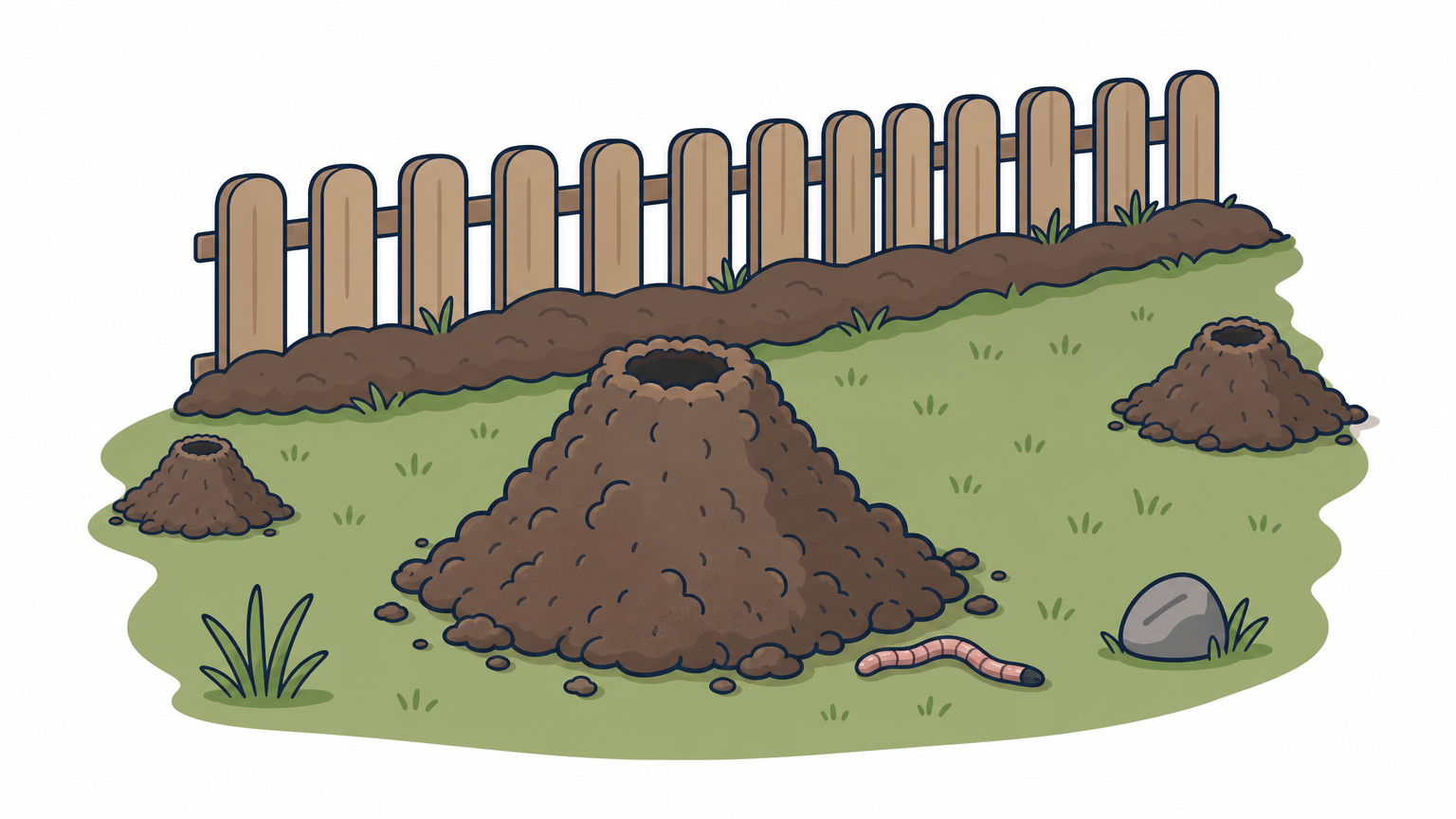
You will see two kinds of tunnels. Shallow feeding tunnels show up as raised ridges, and deeper runways connect feeding areas and push up volcano-shaped molehills. In western Washington, fall rains soften the ground, and moles shift to new fertile ground as the seasons change . That is why a yard that was quiet in summer can suddenly look plowed in October.
Which methods hold up
Extension programs at universities agree on a short list. The only two methods that control moles effectively are bait they will eat or physically removing them . In practice, trapping is the more dependable of the two, and everything else is a supporting move at best.
That also answers the common "overnight" and "permanent" questions. Nothing clears a yard overnight, though a well-placed trap can catch a mole within a day or two. Nothing is permanent either, because new moles move in from neighboring land whenever your soil is attractive and the tunnels sit empty.
Trapping in an active runway is the fastest proven fix, and every other tactic only supports it.
Step 1. Find the active runways
Confirm you have moles
Check the evidence before you buy anything. Moles eat animals, not plants, so chewed bulbs and roots point to a different pest.
| Pest | Telltale sign | Diet |
|---|---|---|
| Mole | Volcano-shaped mounds, raised ridges, no open hole | Earthworms, grubs, insects |
| Gopher | Fan or crescent-shaped mounds with a plugged hole to one side | Roots, bulbs, plants |
| Vole | Narrow surface trails in grass, small open holes | Grass, plants, bark |
Run the flag test
Not every tunnel is in use. Many are abandoned side branches, and a trap there catches nothing. The test below finds the main runways.
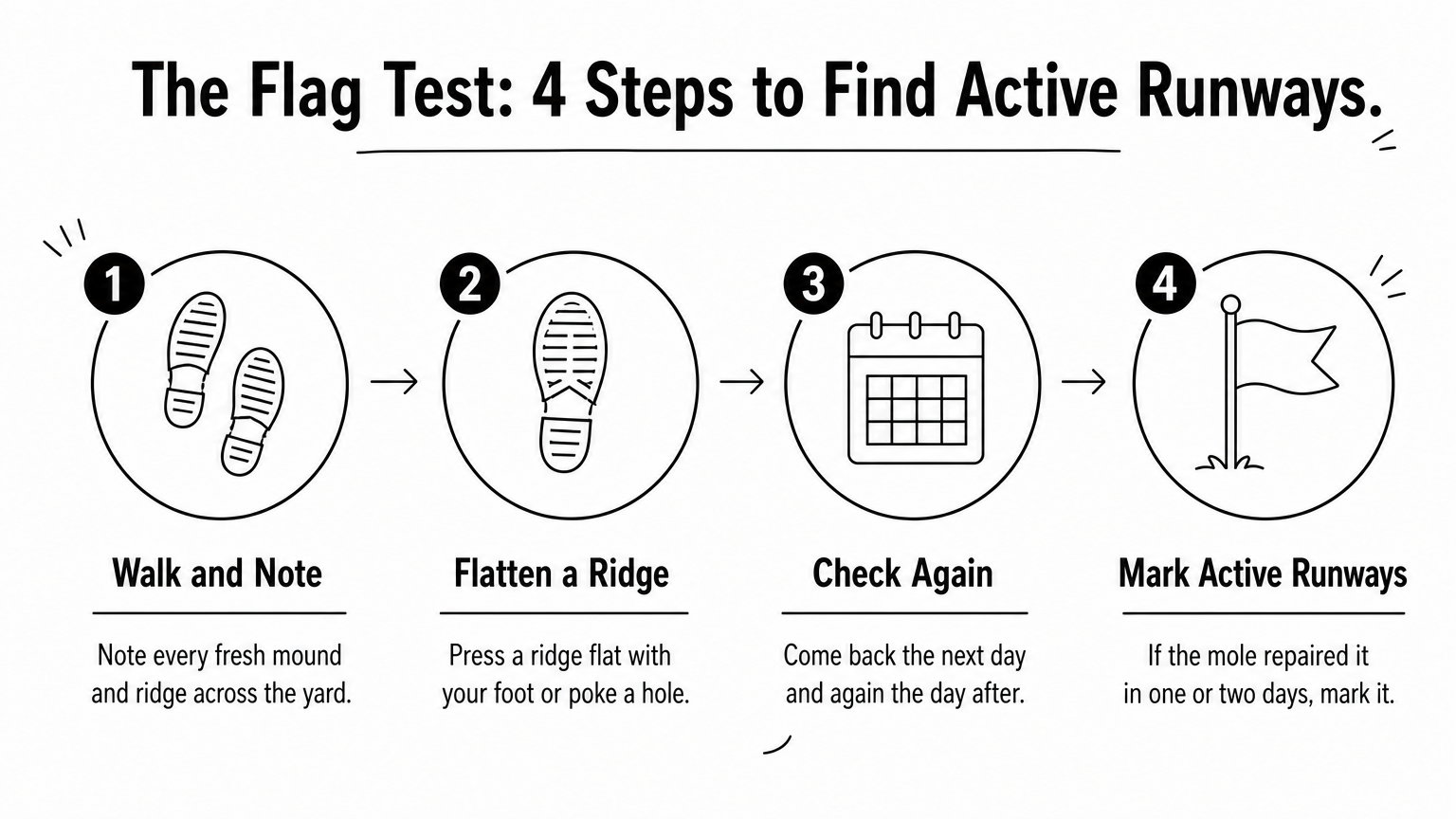
- Walk the yard and note every fresh mound and ridge.
- Press a short section of ridge flat with your foot, or poke a hole in the top of the tunnel with your finger or a half-inch dowel.
- Come back the next day and again the day after.
- If the mole repaired the damage within one or two days, mark it as an active runway .
The best candidates are straight tunnels and those that follow fences, walkways, foundations, or the edge of the lawn. A runway that stays flat for two days is abandoned, so ignore it.
A tunnel the mole rebuilds within two days is the only place worth setting a trap.
Step 2. Trap the moles
Choose and set the trap
Trapping works because it removes the animal itself. The common styles are scissor-jaw, harpoon, and choker-loop traps, and each one sits inside the tunnel. Read the instructions for your model, since the triggers differ.
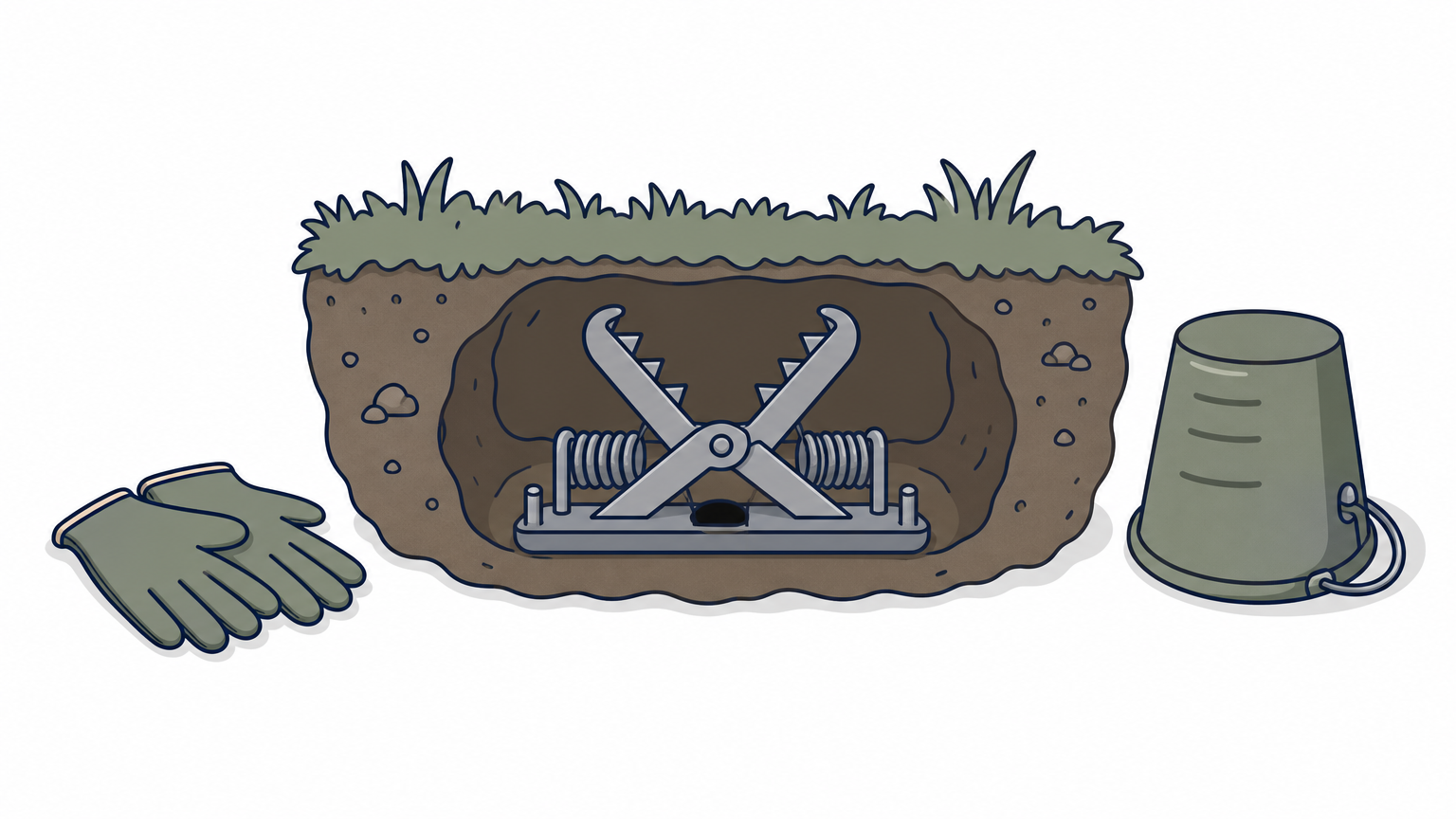
The general setup is the same. Wear gloves to reduce human scent. Compress the soil over the active tunnel, then place the trap legs so they straddle the tunnel and push them deeply into the ground. Cover the spot with a bucket or a board to block light and keep pets and children away.
Check, reset, and keep everyone safe
Check traps once or twice a day. If a runway produces nothing in two to three days , move the trap to another active runway. If you catch one, reset it, because a yard often has more than one mole.
Spring-loaded traps are sharp, so keep dogs and children out of the area and stake or cover each trap. Handle a caught mole with gloves and dispose of it properly. If you do not want to kill moles, a buried hardware cloth barrier can protect a small garden bed, but it is impractical across a whole lawn.
Check traps daily and move any trap that catches nothing within three days.
Step 3. Use baits and repellents wisely
How each method compares
Many yards need more than one move, but the methods are not equal. This table shows where each one stands.
| Method | Reliability | What to know |
|---|---|---|
| Trapping | Most reliable | Needs active runways and daily checks |
| Worm-shaped bait | Can work | Moles die underground; follow the label and protect pets and wildlife |
| Castor oil repellent | Mixed | Needs monthly reapplication, may push moles next door |
| Dish soap, vinegar, flooding | No solid evidence | Soil is already damp, so the effect is temporary at best |
| Sonic stakes, repellent plants | No solid evidence | Moles tend to ignore them |
| Grub control alone | Rarely enough | Earthworms are a main food source |
| Shovel ambush | Rare success | Requires watching a ridge move in real time |
Dish soap deserves a direct answer. A soapy drench does not kill moles, and it does not reliably push them out.
Cut food and water, realistically
Killing grubs only helps if grubs are what draw moles to your lawn. Moles also eat earthworms, and you cannot remove those without damaging the soil. Treat grub control as a supporting measure , not a cure.
Watering helps more than most people expect. Most lawns need about 1 inch of water per week from rain or irrigation, and soaking beyond that keeps soil soft and worm-rich. These natural steps make your yard less attractive, but they will not evict moles that are already digging.
Repellents and food control make your yard less appealing, but only trapping or bait removes the moles.
Step 4. Repair the lawn and prevent a return
Flatten tunnels and repair damage
Stomping tunnels does not get rid of moles, but it is the right move once they are gone. Flatten ridges with your foot and rake mounds into the grass. Fill low spots with topsoil and reseed bare patches.
Wait until ridges stay flat for a week or two before you repair. New ridges show you immediately that a mole is back. Then you can reset a trap in that runway instead of discovering the damage later.
When to call a professional
Call a professional if two rounds of trap resets catch nothing, if your property is large, if pets or children make bait and traps risky, or if moles keep coming back. Mole Masters controls moles with underground devices and no poisons or chemicals, and we stake each device down under a hard plastic cover. Most clients need five visits or fewer.
Our In/Out Mole Control estimate is "Up-To" $395 for a property of half an acre or less on a five-visit weekly system, and our average client spends $345, before sales tax. The price drops if the job takes fewer visits, and we do not charge extra per mole. Plan to rake and reseed yourself, since we do not generally repair lawns.
If your own traps catch nothing after two resets, an experienced technician saves you weeks of guessing.
Next steps for a mole-free lawn
Getting rid of moles comes down to one sequence. Find the runways the moles are actually using, trap them there, treat baits and repellents as support rather than solutions, and repair the lawn only after the activity stops. Then keep watching, because empty tunnels invite new moles.
If you are in the Seattle or Puget Sound area and would rather hand the job to a team that only does mole control, request a free estimate from Mole Masters. You will get a worst-case price up front and a plan built around your yard.