

Mole Pest Control Removal: How to Hire the Right Pro
Good mole pest control removal comes down to four moves. Confirm the animal is a mole, choose a service that traps instead of poisons, hire a licensed and insured provider that focuses on moles, and get a written quote with a maximum price. At Mole Masters, a typical lot of half an acre or less tops out at $395 for a full round of service, which gives you a useful yardstick when you compare quotes.
Meanwhile, the problem keeps growing. Fresh mounds show up overnight, the ground feels spongy underfoot, and the mower scalps the ridges. Moles tunnel through the soft, damp soil of the Puget Sound region for much of the year, and they eat earthworms and insects, not grain. That is why many homeowners who tried store-bought poison or bait still have moles when they finally call a pro.
This guide walks you through the hiring process in four steps, from identifying the pest to reading an estimate. Mole Masters has done nothing but mole removal in the Pacific Northwest since 1991, so we know what separates a good job from a wasted check. The steps work whichever company you pick in Seattle, Issaquah, Puyallup, Gig Harbor, or elsewhere in King and Pierce counties.
Why moles need a specialist
Why general pest control often misses moles
Moles live in tunnels you cannot see, and one animal can push up dozens of mounds. Anything you spread or spray on the lawn never reaches it. A specialist reads the tunnel system , finds the runs the mole still uses, and places devices where the animal actually travels. Moles are solitary, so you are usually dealing with one or a few animals, not a colony.
Many of our customers called us only after in-store products, poisons or bait failed. That is common, because the mole is feeding on live prey underground, not nibbling bait on the surface.
Moles are caught in their tunnels, so success depends on reading those tunnels, not on what you put on the lawn.
Is killing moles legal in Washington?
Moles are generally not a protected species, and property owners may deal with them on their own land. Trap and pesticide rules still apply , though, and they can change. Confirm current details with the Washington Department of Fish and Wildlife before you set anything yourself.
Hiring a licensed and insured provider moves that risk to someone who handles it every day. It also keeps pets and children away from loose traps or bait.
Step 1. Confirm you have moles and document the damage
Tell moles from gophers and voles
Different pests need different fixes, so check the signs first. A provider will do this too, but you save time by knowing.

| Pest | Surface sign | What you will see |
|---|---|---|
| Mole | Round, volcano-shaped cones of fine soil | No open hole, raised ridges across the lawn |
| Pocket gopher | Fan or crescent-shaped mounds | A plugged hole off to one side of the mound |
| Vole | Little or no soil piled up | Narrow runways in the grass and small open holes |
If you see cone-shaped mounds and raised ridges but no open holes, you almost certainly have moles.
Document the yard before you call
Press down a ridge with your foot. If it is pushed back up within a day or two, that run is active , and you can tell the provider where to start. Then collect these details:
- Photos of the mounds and ridges, with the date.
- A rough sketch of where new mounds appear.
- Your approximate lot size.
- Where pets or children play.
- Any irrigation or drainage trouble.
A clear picture of the damage speeds up your estimate and helps the technician plan the first visit.
Step 2. Choose a removal method that fits your yard
Compare the common methods
Only a method that removes the animal solves the problem. Here is how the common options compare.
| Method | How it works | Main drawback |
|---|---|---|
| Traps or underground devices | Catch the mole in an active run | Need correct placement and follow-up visits |
| Poison bait | Placed in tunnels | Moles feed on live prey, and pets and wildlife are at risk |
| Repellents and vibrating stakes | Make the soil unpleasant | Results are inconsistent, and moles often reroute |
| Grub or insect control | Reduces food | Moles eat mostly earthworms, so it rarely helps |
For most yards, traps and devices without chemicals are the most dependable choice.
What device-based service looks like
Mole Masters uses underground devices with no poisons or chemicals. Each device sits under a hard plastic cover and is staked down, so pets and kids cannot reach it. A technician checks the devices weekly, adjusts placement, and summarizes what is happening on-site.
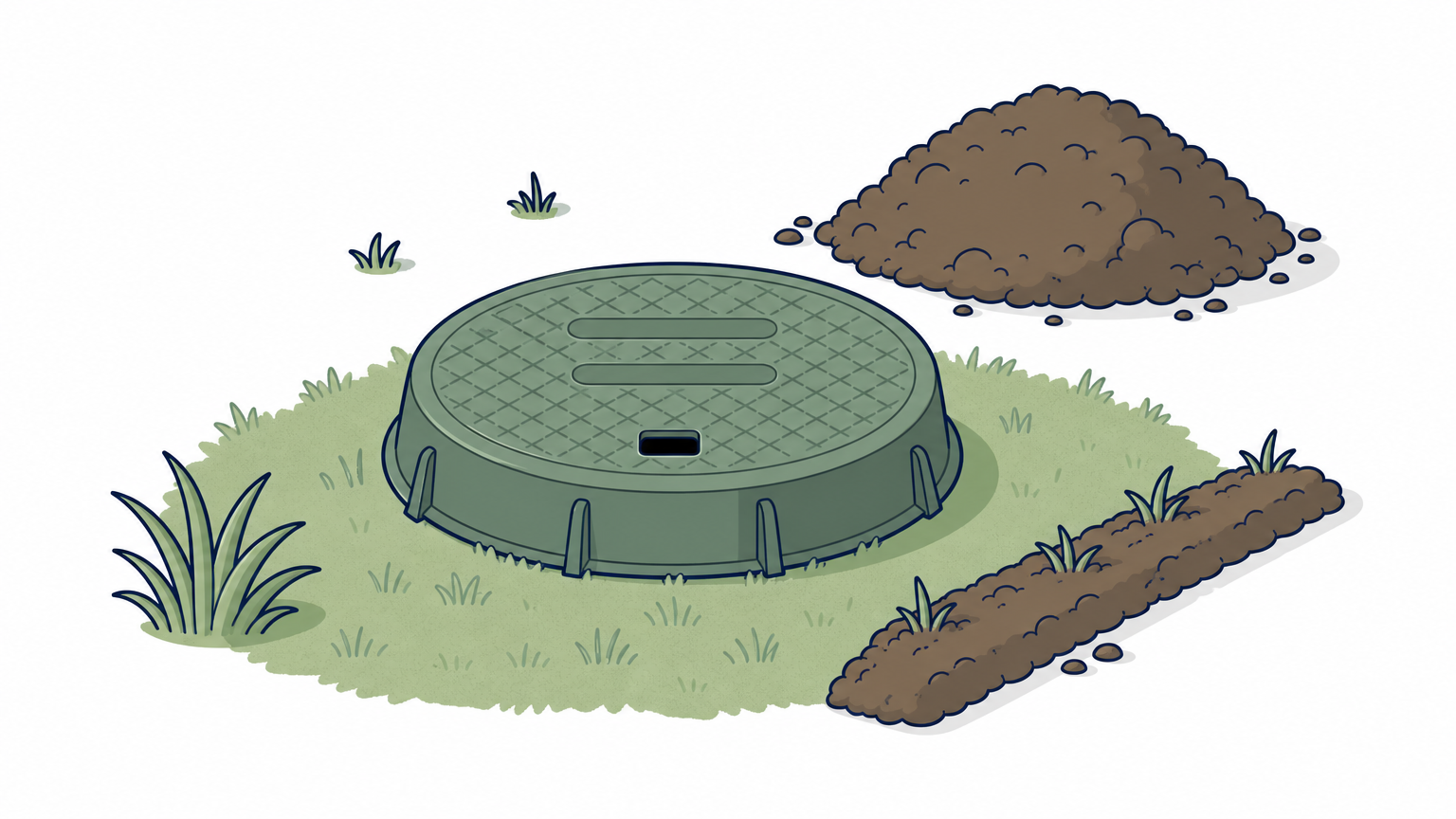
Pick the method that removes the mole itself, because anything that only nudges it along just moves the damage.
Step 3. Vet local providers before you call
Questions to ask every company
Whether you search for a mole exterminator near you or ask a neighbor, put the same questions to each company:
- Do you handle moles only, or is this a side service?
- Are you licensed and insured?
- Do you use poison, or traps and devices?
- How many visits are typical, and what happens if the moles are not caught by then?
- Is the quote a flat price, a ceiling, or a charge per mole?
- Do you clean up mounds or repair the lawn afterward?
- Do you serve my city?
Ask the last one before anything else. Many companies do not clean up molehills or repair lawns, Mole Masters included, so plan to rake and reseed yourself. If you are unsure whether a company covers your area, call the office and have them look it up.
A provider who answers all seven questions plainly is usually one you can trust with your lawn.
Check the track record
Read reviews on Google, Yelp and Facebook for recent, detailed comments about results and communication. Look at how long the company has operated. Mole Masters has focused only on moles since 1991, is licensed and insured, and has never had to use its insurance in 30 years. Its technicians each have 3 to 10+ years of hands-on experience.
Step 4. Get a written quote and budget the job
Read the estimate line by line
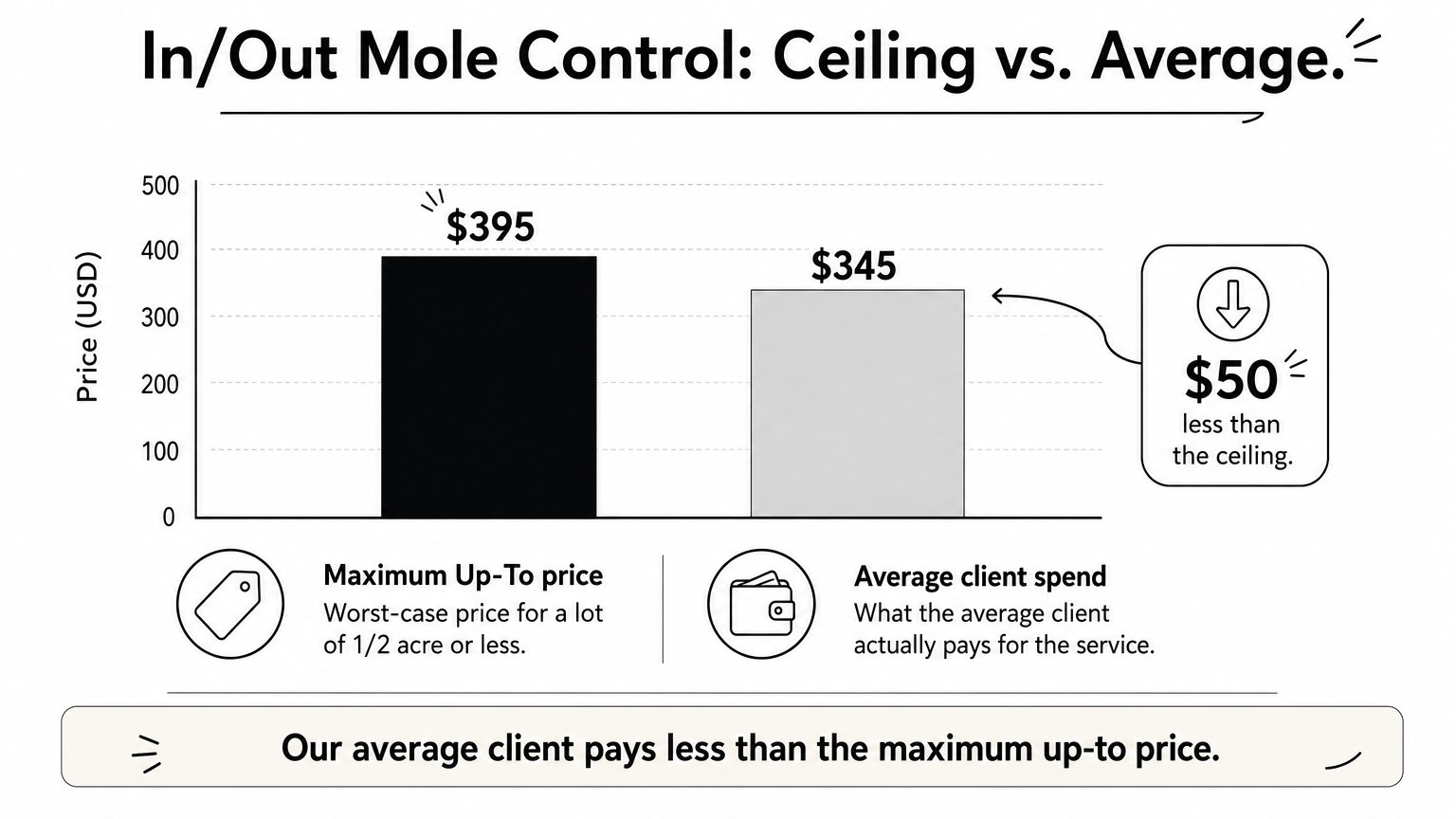
A good estimate states a maximum price , the number of visits, and what is excluded. Mole Masters gives a free "Up-To" estimate, which is the worst-case price, and the final bill can only come in lower. For its In/Out Mole Control, the quote works like this:
| Quote detail | In/Out Mole Control |
|---|---|
| Maximum ("Up-To") price | $395 |
| Average client spend | $345 |
| Lot size behind the price | 1/2 acre or less |
| Visits | Five, weekly check-ups |
| Sales tax | Not included |
| Early pull-out | Sliding-scale discount |
| Charge per mole caught | None |
Here is how that plays out. Say you have a third-of-an-acre lot with mounds along the fence line. Your ceiling is $395 plus sales tax, or $79 per visit spread across five weeks. At the average spend of $345, you pay $50 less than the ceiling. Larger or harder properties can raise the estimate, so confirm current pricing when you request yours. Commercial properties are assessed through the office, not by online estimate.
A quote with a ceiling and a per-mole charge of zero is the easiest kind to compare.
Plan for after the service
Once the moles are controlled, ask about prevention . A maintenance plan with spread-out visits suits yards that keep attracting moles. If you need maintenance longer than eight months, Mole Masters recommends checking out its year-round service. Mole Masters does not generally recommend starting with the year-round program, because most yards only need the initial service.
Next steps for your yard
To recap, confirm the pest, pick a method that removes the mole without poison, vet providers with the seven questions, and insist on a written quote with a maximum price. Do those four things and you will know what a fair job looks like before anyone steps onto your lawn.
If you live in Seattle, Issaquah, Puyallup, Gig Harbor, or elsewhere in King or Pierce County, you can request a free Up-To estimate from Mole Masters or call (253) 926-0402. The office is open Monday to Thursday 9am to 5pm and Friday 9am to 3pm.