

How to Get Rid of Moles in Your Lawn Around Seattle
The most reliable way to get rid of moles in your lawn is to trap them in their active tunnels. Find the main runways, set traps inside them, check the traps every day, and then repair the damage. Poison baits carry risks for pets and wildlife, and home remedies like castor oil, dish soap, and coffee grounds rarely remove the moles.
Moles are hard to beat because you almost never see them. They work underground, push up fresh mounds overnight, and can wreck a lawn within days. Most homeowners try a repellent or a store-bought bait first, then watch the mounds keep coming.
This guide walks you through four steps: confirm it is a mole, find the active tunnels, trap the animal, and repair the lawn so it stays clear. Mole Masters has done nothing but mole control around Seattle and Puget Sound since 1991. You will also learn when trapping stops being a good DIY project.
Why moles dig and what you are up against
Moles dig because your soil is full of food, mainly earthworms and insect larvae. They do not eat grass or roots, so the lawn damage is a side effect of hunting.
What moles want from your lawn
Wet, loose soil holds more earthworms and is easy to tunnel through. In western Washington, that describes most lawns from fall through spring. Moles push excess soil up as round mounds, and they keep digging as long as food remains.
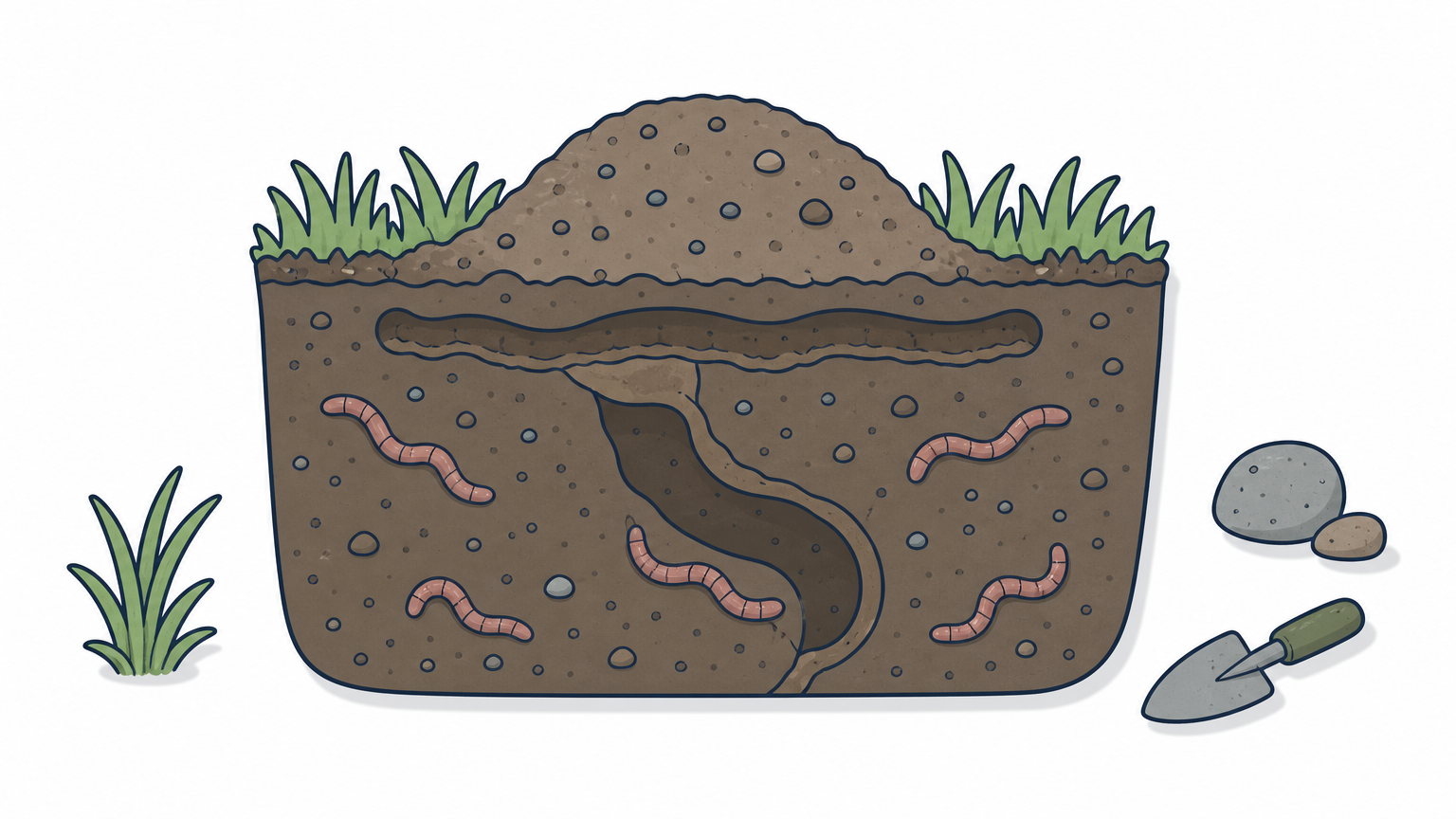
Shallow feeding tunnels show up as raised ridges that soften the turf. Deeper main runways connect the nest, the feeding areas, and the mounds, and those are where you will place traps. Knowing the difference decides whether your trap catches anything.
You cannot make a lawn unappealing to moles, so the fix is to remove the moles themselves.
Make sure it is a mole
Treating the wrong animal wastes weeks. Compare the signs before you buy anything.
| Animal | Mound shape | Other signs | Diet |
|---|---|---|---|
| Mole | Round, volcano-like cone | Raised ridges, no visible hole | Earthworms, grubs |
| Gopher | Fan or crescent shape | Plugged hole off to one side | Roots, bulbs, plants |
| Vole | No mound | Open surface holes, grass runways | Grass, roots, bark |
Step 1. Find the active tunnels
Active runways are the only place a trap works, and you find them by flattening tunnels and seeing which ones get rebuilt.
Test the runways
Walk the lawn and look for straight ridges that link mounds, along walkways, fences, and garden edges. Then:
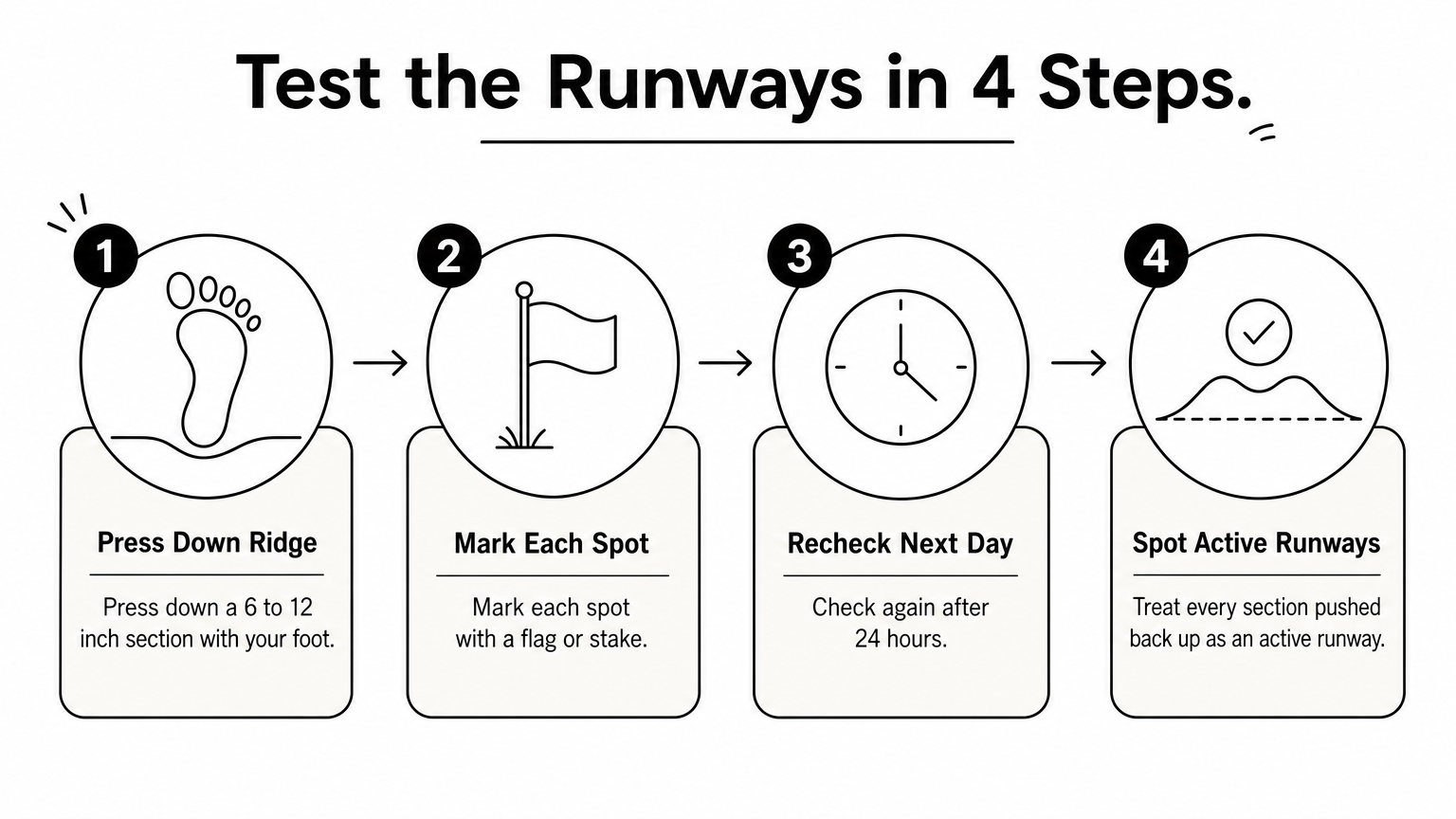
- Press down a 6 to 12 inch section of each ridge with your foot.
- Mark each spot with a flag or stake.
- Check again after 24 hours.
- Treat every section that has been pushed back up as an active runway.
Ignore the ridges that stay flat. Moles abandon many shallow tunnels after one pass.
A tunnel that rebuilds itself within a day is the one worth trapping.
Stomping is for testing, not control
People ask whether you should stomp down mole tunnels. It does not remove the mole, and it will just dig a new route. Use stomping only as the test above, and as a quick way to see where the animal is working.
Step 2. Trap the moles
Trapping is the fastest dependable method. There is no true overnight fix, but a well-placed trap in an active runway often catches a mole within a few days. Purdue's extension specialists name trapping, along with bait, as one of the only two methods that effectively control moles. Trapping is also what farmers and professionals rely on.
Choose and set the trap
Hardware stores sell scissor-jaw , harpoon , and tunnel-style traps. Follow the instructions on the one you buy, because each type is set differently. These rules apply to all of them:
- Place the trap in a confirmed main runway, not a shallow ridge.
- Wear clean gloves, since human scent can make moles avoid the trap.
- Keep soil and light out of the tunnel when you cover the opening.
- Set traps where the runway leaves the mound area, and in both directions of travel if the trap allows.
- Check every trap daily and move it after 2 to 3 days without a catch.
Always keep traps out of reach of kids and pets, and check your local rules on trapping.
When to call a professional
Trapping stalls when you hit a large property, several moles, or a runway system you cannot read. A pro knows where to place devices and how to adjust each week. Mole Masters uses underground devices with no poisons or chemicals, staked down under hard plastic covers. Its In/Out Mole Control runs on five weekly visits, with an "Up-To" price of $395 for a half acre or less. The average client spends $345, and the price drops if the job ends early. That worst case works out to about $79 per visit, before sales tax. The estimate is free.
If three trap resets produce nothing, you are probably guessing at the runway, not unlucky.
Step 3. Skip the remedies that fail
Most popular fixes either fail or add risk, so cross them off before you spend time and money. The table sums up how each one holds up.
Poisons and home remedies, compared
| Method | Verdict |
|---|---|
| Worm-shaped poison baits | Can work, but poison risks pets and wildlife, and moles eat live worms |
| Castor oil repellents | Mixed results at best, and moles often just shift to the next yard |
| Dish soap, vinegar, coffee grounds | No reliable evidence, and some can harm soil or plants |
| Grub control | Rarely helps, because earthworms are the main food |
| Cutting back watering | Helps a little, but rain keeps soil moist anyway |
| Stomping tunnels | Only useful as a test, not as control |
Natural repellents are not harmful to try, but treat them as a short delay, not a cure. If your yard is a pet and kid zone, avoid poison baits entirely.
Anything that does not kill or remove the mole only changes where it digs.
Why repellents seem to work
A mole may leave your lawn for a few days after a repellent, then return when the smell fades. That temporary pause is why people keep trying them. Judge any method by whether fresh mounds stop for two full weeks.
Step 4. Repair the lawn and keep moles out
Once the mounds stop, rake the soil flat, fill the tunnels, and reseed bare spots. Repair is also how you find out whether the problem is truly gone.
Fix the damage
Rake each mound level, and scatter the loose soil across the lawn instead of piling it. Tamp down collapsed tunnels with your foot, then water. Seed any bald patches in fall or spring, and keep the soil damp until the grass takes. Fresh mounds after repairs tell you a mole is still active, so reset traps right away.
Stop the next mole
New moles move in from neighboring land, especially in the wet months. Check the lawn weekly from fall through spring and trap new runways as soon as they appear. For a small garden or bed, you can bury hardware cloth at least a foot deep and bend the bottom outward. A whole lawn is too big for that. If you have constant pressure year after year, a maintenance schedule with regular visits is cheaper than rebuilding turf.
Catching the first new mound costs a trap and ten minutes, while ignoring it costs a lawn.
Trap first, then repair
Moles are a food problem you cannot solve with smells or soap. Confirm the animal, find the runways that get rebuilt, trap inside them, and repair the lawn once the mounds stop. Skip the poisons and the pantry remedies.
If your yard is large, the moles keep returning, or you would rather not handle traps, you can request a free estimate from Mole Masters and get an upfront "Up-To" price before any work begins.