

How to Get Rid of Moles in Your Seattle Lawn: 4 Steps
The short answer to how do you get rid of moles in your lawn is to find the tunnels the mole still uses, trap it inside one, and then fix whatever keeps drawing moles back. Traps and baits are the only methods that remove the animal. Repellents and kitchen remedies rarely do more than buy you a few days.
The trouble is that mole damage looks much bigger than the animal. One mole can push up dozens of mounds, and most yards have only one or a few. So people stamp down the mounds, pour dish soap or coffee grounds into the holes, and wake up to fresh mounds. Every week of that costs you more turf, and the open tunnels give other pests a free pathway.
This guide walks you through four steps: mapping the active tunnels, trapping, cutting what attracts moles, and repairing the lawn. It comes from Mole Masters, a family-run company that has done nothing but mole control around Seattle and Tacoma since 1991, so the advice reflects how moles behave in Puget Sound yards. Where DIY stops being practical, we say so.
Why only trapping reliably removes moles
Trapping is the most dependable way to get rid of moles in your lawn because it takes the animal out of the ground. Poison bait is the only other method that kills, and it carries risks. Everything else, from castor oil to coffee grounds, only tries to make your yard less pleasant.
Confirm you have a mole
Treating the wrong animal wastes weeks, so check the evidence first. Moles leave mounds of loose soil and raised ridges where tunnels run just under the turf. Moles eat earthworms and insect larvae, not plant roots, which matters for the repair step later.
- Mole: round, volcano-shaped mounds and raised surface ridges.
- Gopher: fan or crescent-shaped mounds with a plugged hole off to one side.
- Vole: no mounds, just shallow runways in the grass and small open holes.
Which methods are worth your effort
Here is how the common options compare, including the home remedies people search for most.
| Method | How well it works | Main drawback |
|---|---|---|
| Trapping in active runs | Most reliable | Needs correct placement and daily checks |
| Poison bait (worm-style) | Works for some yards | Risk to pets and wildlife, and moles may ignore it |
| Castor oil repellent | Short-term at best | Washes out with rain, may push the mole next door |
| Grub or food control | Rarely clears moles alone | Earthworms are a main food and you can't remove them |
| Dish soap, coffee grounds, vinegar | No reliable evidence | Weeks pass while damage spreads |
Remove the mole, and the mounds stop; discourage it, and you mostly relocate the problem.
Step 1. Find the tunnels moles still use
Spend one day mapping before you buy or set anything. An active run is a tunnel the mole travels repeatedly, and a trap only catches a mole when it sits in one. Skip this step and you are guessing.
Reset the ridges and mark them
Walk the lawn and follow this routine:
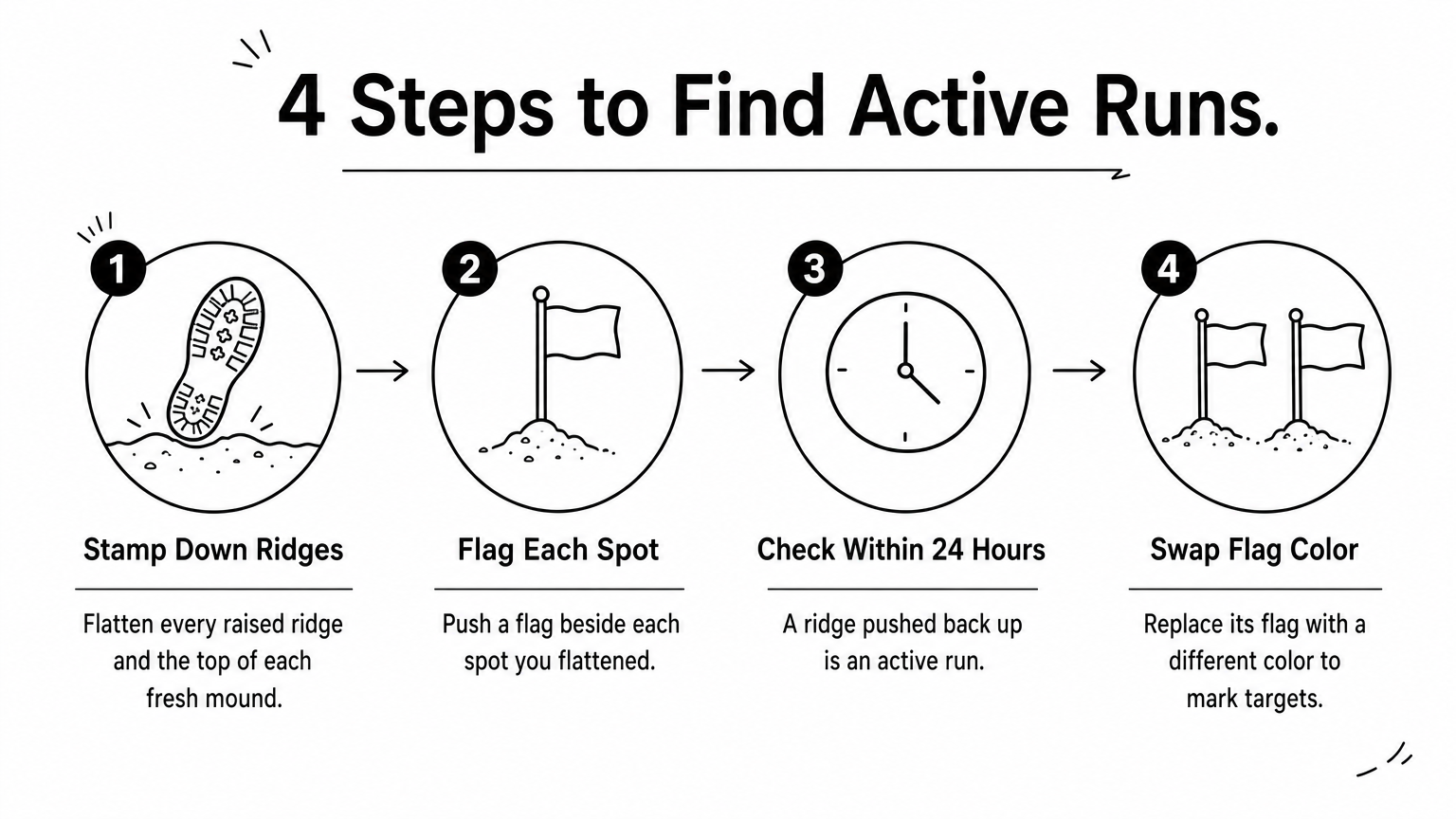
- Stamp down every raised ridge and flatten the top of each fresh mound.
- Push a flag beside each spot you flattened.
- Check again within 24 hours. A ridge that has been pushed back up is an active run.
- Swap its flag for a different color so you can see your targets at a glance.
Pick the best trap spot
Look for straight ridges that run along fences, walkways, driveways or foundations. Moles tend to use these edges like highways. Clusters of mounds often mark a feeding area, so the tunnel leading into the cluster is usually the better place for a trap than the cluster itself. If a ridge stays flat for several days, ignore it and save your effort.
A trap in a dead tunnel catches nothing, so let the mole show you which runs are alive.
Step 2. Trap the mole in an active run
Set one trap per active run, check it at least once a day, and move it if nothing is caught after two or three days. When the trap sits in a truly busy run, you usually catch the mole within a few days. Nothing works reliably overnight, so be wary of anyone promising that.
Choose a trap and set it
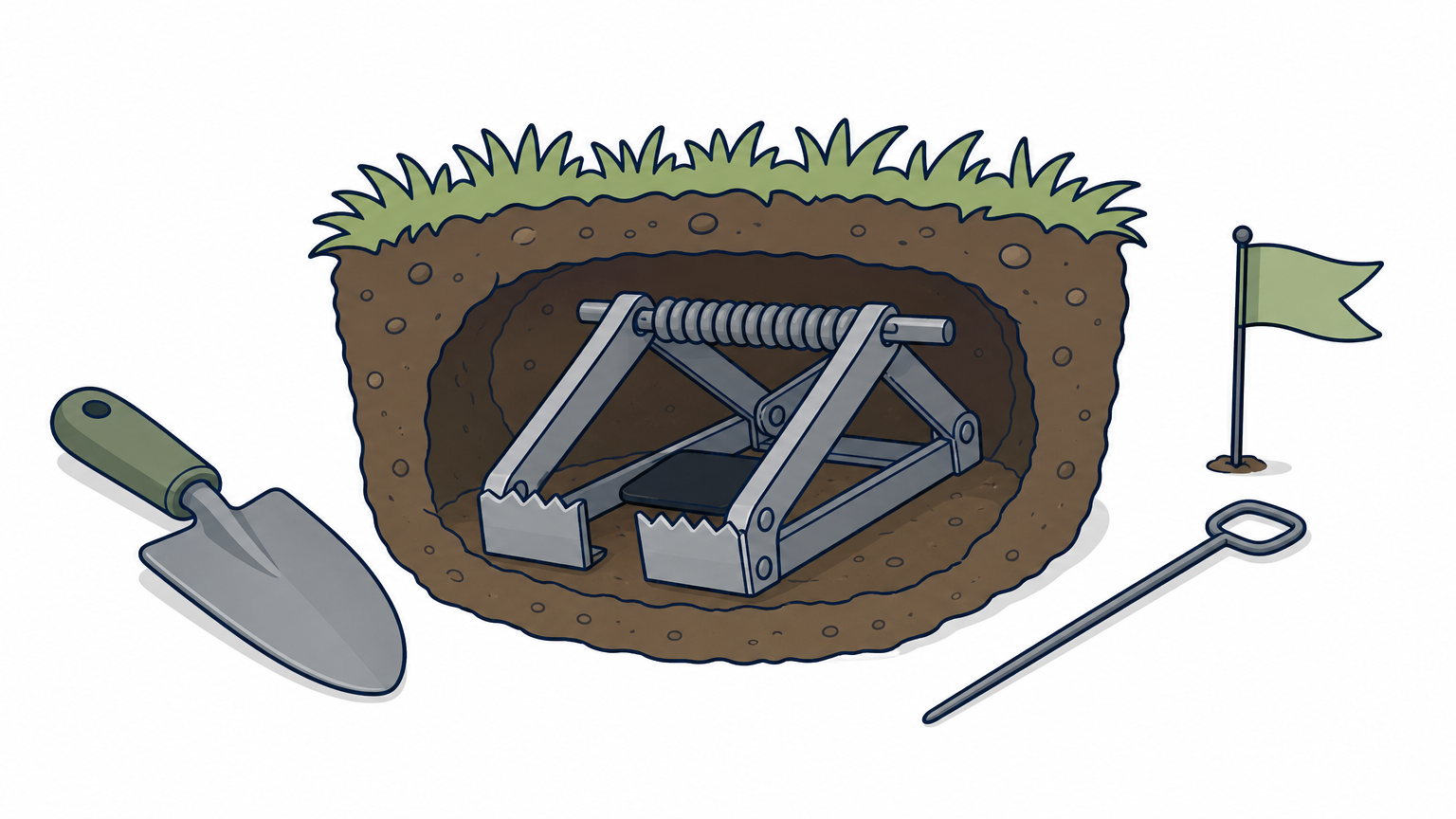
The three common types are scissor-jaw traps set inside an opened tunnel, harpoon traps pressed down over a ridge, and loop or tunnel-insert traps pushed into the run. Any of them works if you follow the instructions on the package. Here is the general routine:
- Wear clean gloves to limit human scent.
- Push a probe or thin dowel into the ground beside the ridge until you feel it drop into the void of the tunnel.
- Open the tunnel with a trowel for a scissor-jaw trap, or set a harpoon trap right over the probed run.
- Set the trap according to the package, then stake a flag beside it.
- Cover any opened tunnel with a bucket or board to block light, since moles seal breaches quickly.
- Check daily, and move the trap to another run after two or three empty days.
Traps are spring-loaded and sharp, so keep children and pets away, and cover the setup rather than leaving it exposed.
One well-placed trap in a live run does more than a dozen remedies poured on the surface.
Why poison bait is a weak second choice
Worm-shaped baits go into a hole punched in an active run, and the mole has to choose to eat them. Moles live on live earthworms and grubs, so acceptance is hit or miss. A poisoned mole or leftover bait can also reach pets and wildlife. Many Mole Masters customers tried store-bought products, poisons or bait before they called.
If you want to get rid of moles without harming pets, trapping is the safer route as long as the traps are covered and checked daily. Mole Masters uses underground devices with no poisons or chemicals for that reason.
Step 3. Cut the draw and use repellents wisely
Food control and repellents support trapping, they don't replace it. Use them to make your lawn less attractive to the next mole, not as your only defense. This is the closest you get to a natural approach, and it works best after the current mole is gone.
Reduce what moles eat
Overwatering keeps the top layer moist and full of earthworms, so water deeply but less often and let the surface dry between sessions. To check for grubs, cut a one-foot square of turf on three sides, fold it back, and count the grubs in the top few inches. Treat only if you find a real infestation. Earthworms remain a main food, so expect food control to help, not to clear the yard by itself.
Use castor oil products the right way
Castor oil granules and sprays make the soil unpleasant, and some mole owners report fewer new mounds after regular use. Apply over the whole lawn as the label directs, water them in, and reapply after heavy rain . Western Washington's wet months wash them out quickly. The honest limit is that a repellent may just move the mole to your neighbor's yard, so apply it after trapping.
Repellents work as a fence after the trapping, not as a replacement for it.
Step 4. Repair the lawn and know when to call a pro
Once you stop seeing fresh mounds for about a week, repair the damage and decide whether you need help. Repair too early and a returning mole buries your seed. Grass usually comes back, because moles don't eat roots. The tunnels only cut roots off from moist soil.
Repair the lawn
Rake the mounds flat and spread the soil thinly over low spots. Press the tunnels down by foot or with a light roller so the roots touch soil again, then water well. Overseed bare patches in early fall or spring, when seed establishes best in the Pacific Northwest. Keep your flags in place for a few weeks, because a new mound means a new mole has moved in, not that your repair failed.

When to call a professional
Call a pro if mounds keep appearing after two weeks of well-placed traps, if the property is large, or if you don't want to handle traps. No one can promise a mole-free yard forever, since moles move in from surrounding land. What a pro can promise is control now and a plan for later.
Mole Masters' In/Out Mole Control is an "Up-To" $395 estimate for properties of a half acre or less, with five weekly visits. Our average client spends $345, and the price excludes sales tax. If we pull out early, you get a sliding-scale discount, and we don't charge extra per mole caught. Estimates are free. We don't generally clean up molehills or repair lawns, so Step 4 stays your job. If you need maintenance for longer than eight months, we recommend year-round service.
Fix the lawn only after the digging stops, and call for help when two weeks of traps haven't.
Start with one active tunnel
To get rid of moles in your lawn, map the active runs, trap the mole in one, cut the draws that attract the next, and repair the turf once the digging stops. Kitchen remedies and surface repellents are not substitutes. If the mounds keep coming, or the yard is simply too big to trap yourself, the job is faster in experienced hands.
When you'd rather hand it off, request a free estimate from Mole Masters by form, phone or email. We serve Seattle, Tacoma and the greater Puget Sound area with no poisons or chemicals.