

5 Ways to Get Rid of Garden Moles, from Traps to Repellents
The most reliable answer to how do I get rid of garden moles is to remove the animal itself, by trapping it or hiring someone who does. Repellents, watering changes and barriers help in specific cases. Hire a professional if you want it handled in a few weekly visits. Trap it yourself if you have a small garden and a few minutes each day. Use barriers if your main goal is to protect a vegetable bed.
A single mole can throw up mounds across an entire lawn, and in a small garden it is often just one animal. Moles eat earthworms and grubs, not your plants, but their tunnels cut through roots and leave the lawn lumpy. No method works overnight, and none is permanent, because an empty territory attracts the next mole.
Below are five ways to get moles out of your garden, ordered by how reliably they work. We have done nothing but mole control in the Seattle and Tacoma area since 1991, so we also tell you which popular home remedies have little evidence behind them.
1. Professional mole control
How it works
A professional finds the active tunnels, places devices underground, and returns on a schedule to check and adjust them. Our In/Out service at Mole Masters uses no poisons or chemicals . Each device is protected with a hard plastic cover and staked down.
Most clients finish in five weekly visits or fewer , though some yards need more. Each visit ends with a summary of what is happening on your property, and the price drops on a sliding scale if we can pull out early.
Professional control removes the mole instead of nudging it into the next yard.
Results and best fit
The listed price is up to $395 , plus sales tax, for a property of half an acre or less on the five-trip system. Our average client spends $345. A quarter-acre lawn would be quoted at up to $395, and you pay less if the job ends sooner. We charge nothing extra per mole caught, and estimates are free.
This suits you if store products or bait have already failed, or if you can't check traps daily. We don't generally fill molehills or repair lawns, so plan on a rake and some topsoil. We serve King and Pierce counties, and you can reach the office at (253) 926-0402.
2. Trapping
How it works
Trapping physically removes the mole, which is why university extension services such as Purdue's count it among the only methods that reliably work. Use a scissor-jaw or harpoon trap set in a run the mole is still using. Stomping down tunnels alone gets rid of nothing, but it does help you find the live ones:
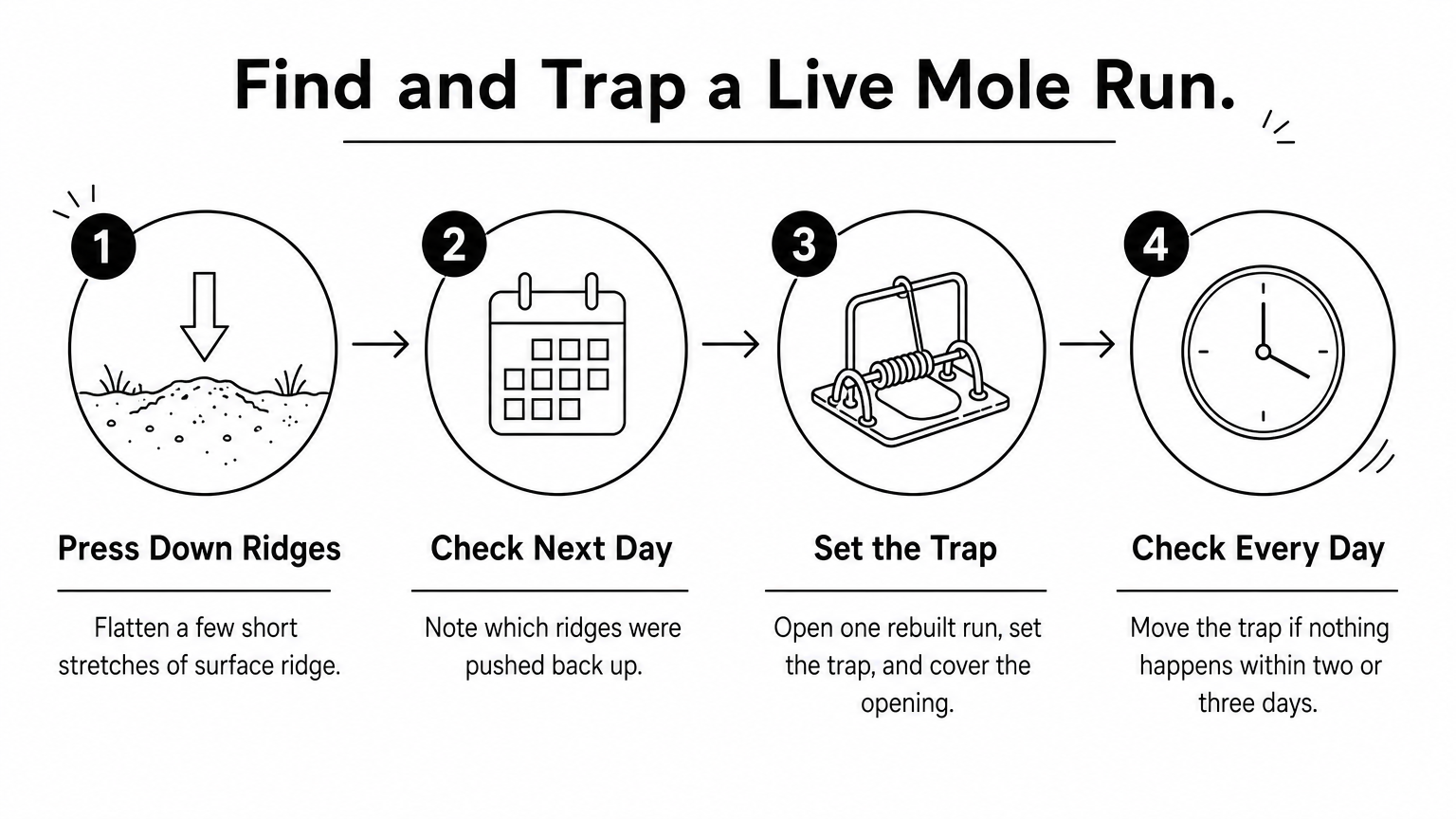
- Press down a few short stretches of surface ridge.
- Check the next day and note which ones were pushed back up.
- Open one rebuilt run, set the trap following its instructions, and cover the opening so light stays out.
- Check the trap every day and move it if nothing happens within two or three days.
Results and best fit
Done well, trapping can clear a single mole within days, but placement is the whole skill . A trap in an abandoned run catches nothing. Expect to reset and relocate it more than once.
It suits you if you have a small garden, one animal and the patience to check daily. Handling a caught mole is on you, so check local rules before buying traps. Poison baits are the other route, but they risk pets and wildlife, which is why we skip them.
A trap only works in a run the mole is still using.
3. Cutting off the food supply
How it works
Moles go where the food is, so a less appealing soil helps. Their main diet is earthworms , plus grubs and other soil insects. Watering less often, and more deeply when you do, leaves fewer worms near the surface. Western Washington's wet winters limit how much moisture you control, so this works best in summer.
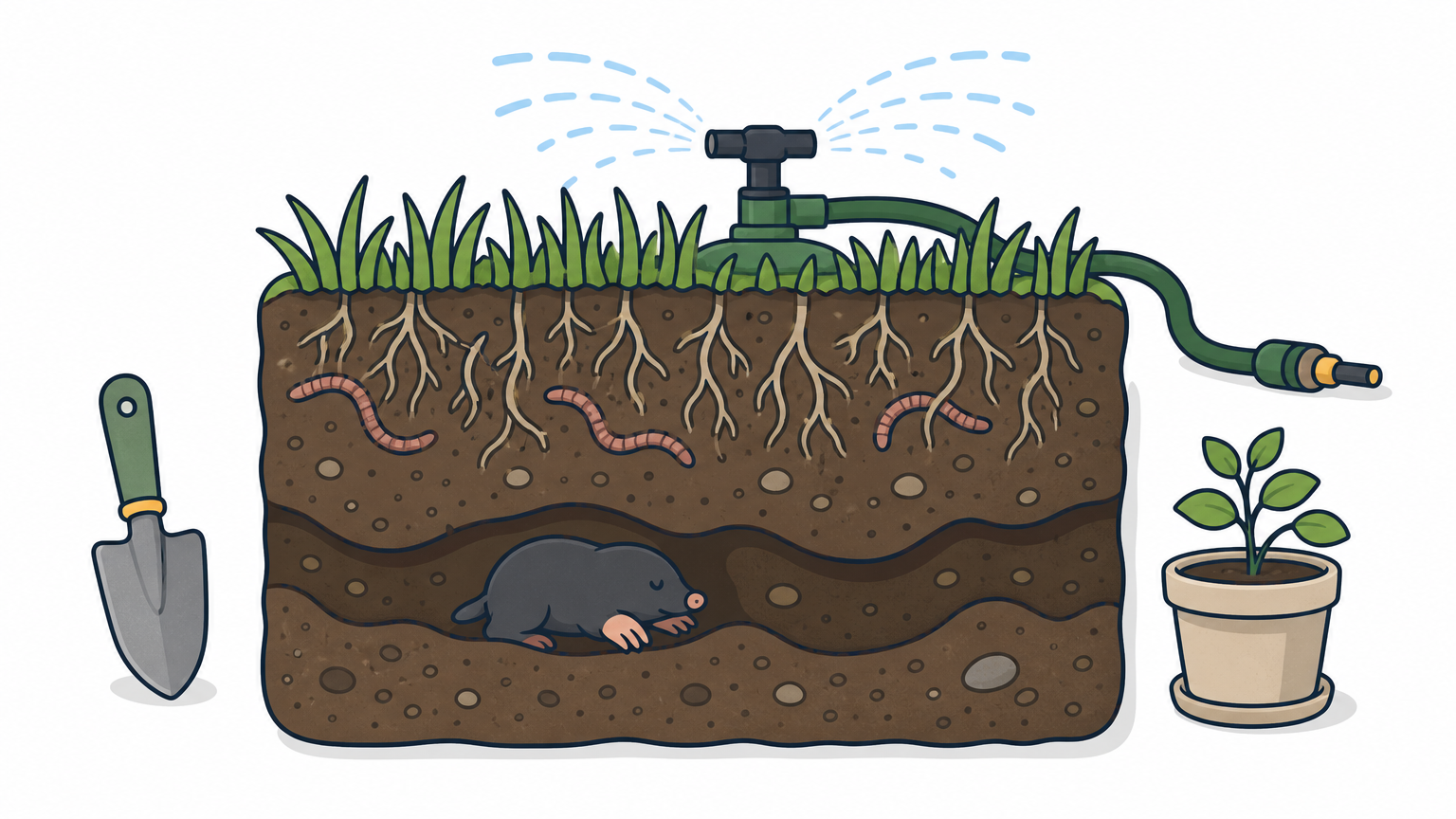
Grub treatments need caution. Milky spore only targets Japanese beetle grubs, so it does nothing about other species. Killing grubs also leaves the earthworms that moles eat in place.
Cutting the food supply helps prevent moles, but it rarely evicts one.
Results and best fit
Expect slow, partial results . A hungry mole with fewer worms nearby usually tunnels farther, which can mean more damage across your lawn. Treat this as a supporting step, not a cure.
It suits lawns that are overwatered or have a confirmed grub problem, and it makes sense after you remove a mole to lower the odds of the next one settling in.
4. Repellents and home remedies
How it works
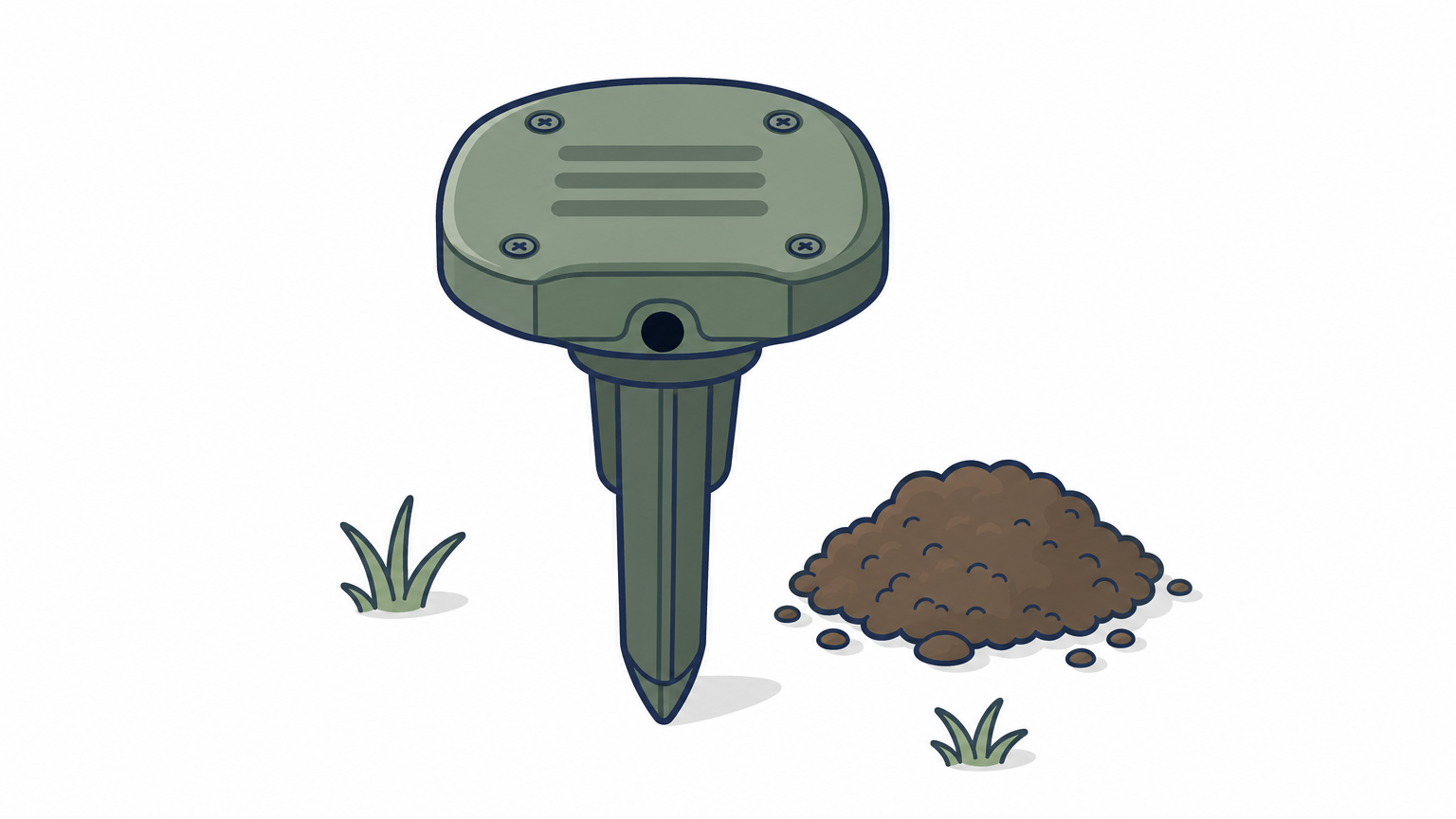
Repellents try to make tunnels unpleasant or empty them of food. The common options are castor oil products, caper spurge plants and ultrasonic stakes. Castor oil smoke is said to line tunnels and deter worms, but the RHS notes that the mole may move elsewhere or simply dig new tunnels nearby.
Coffee grounds, vinegar and dish soap are popular internet answers. They have little reliable evidence behind them, and pouring soap or vinegar into soil can harm the plants and soil life you want to protect.
Results and best fit
Treat repellents as a gamble. Ultrasonic devices may only push a mole to another part of the garden , and the RHS warns they can be audible and distressing to children. Caper spurge also spreads easily by seed.
A repellent suits you as a short-term nudge, such as protecting one bed while you decide on traps or a professional. It is a poor fit if the mole has already settled into your lawn.
Repellents ask a mole to leave; traps and professionals remove it.
5. Barriers for beds and new lawns
How it works
A barrier keeps moles out of the area you most want to protect. For a vegetable bed, bury hardware cloth or wire mesh about 2 feet deep, bend the bottom outward, and let it rise a few inches above the soil. In raised beds, line the base with mesh.
For a new lawn, mole netting must go in before the turf is laid , according to the RHS. It is usually plastic, so weigh the plastic pollution against the protection.
A barrier protects a bed, but it does not remove the mole.
Results and best fit
Barriers work well on the area they enclose, but the mole stays in your garden. Fitting one around an existing bed means digging a trench, so it suits new beds and high-value plots best.
Pair a barrier with trapping or professional control for the rest of the lawn. Once the mole is gone, rake mounds flat and fill collapsed tunnels so the surface stays level.
Choosing your next step
Getting rid of garden moles comes down to removal. Trapping works if you have time. Professional control works if you want the problem handled. Food changes, repellents and barriers support those methods, but they rarely solve a lawn infestation alone.
If moles are tearing up a lawn in King or Pierce county, request a free estimate from Mole Masters. You get an "Up-To" price upfront, and the final cost drops if the job takes fewer visits.