

How to Get Rid of Moles in the Grass and Repair the Lawn
The most reliable way to get rid of moles in the grass is to find an active tunnel, set traps inside it, and repair the lawn once new tunnels stop appearing. Repellents, poison baits and kitchen remedies rarely clear a yard, because moles simply dig somewhere else or ignore them. Trapping removes the animal itself, and that is why it works.
You probably noticed soft, spongy ridges, or fresh mounds that appeared overnight. Your mower now scalps the soil piles, and the grass over the tunnels is turning yellow. Most advice online is a list of folk cures that sound plausible and do nothing, so you lose weeks while the damage spreads.
This guide walks you through the full job in order: confirming you have moles, finding the tunnels they actually use, choosing a method, setting traps, and repairing the turf. It comes from Mole Masters, a family-run company that has done nothing but mole control around Seattle and the Puget Sound region since 1991.
Why moles tunnel in your lawn and what to expect
Moles dig through lawns to hunt worms and insects, not to eat your grass. Knowing what draws them and confirming which animal you have keeps you from spending weeks on the wrong fix.
What moles want from your yard
Moles eat earthworms, grubs and other soil invertebrates , and they eat a large share of their body weight every day. That appetite drives the tunneling. In western Washington, damp soil holds plenty of worms, so mole activity can continue across most of the year , with fresh mounds often appearing after rain and in spring and fall.
The harm to your turf is a side effect. Roots dry out above air-filled tunnels, and mounds smother grass and dull mower blades.
Moles chase food, not grass, so a yard full of worms will keep drawing them in.
Mole, gopher or vole: check before you act
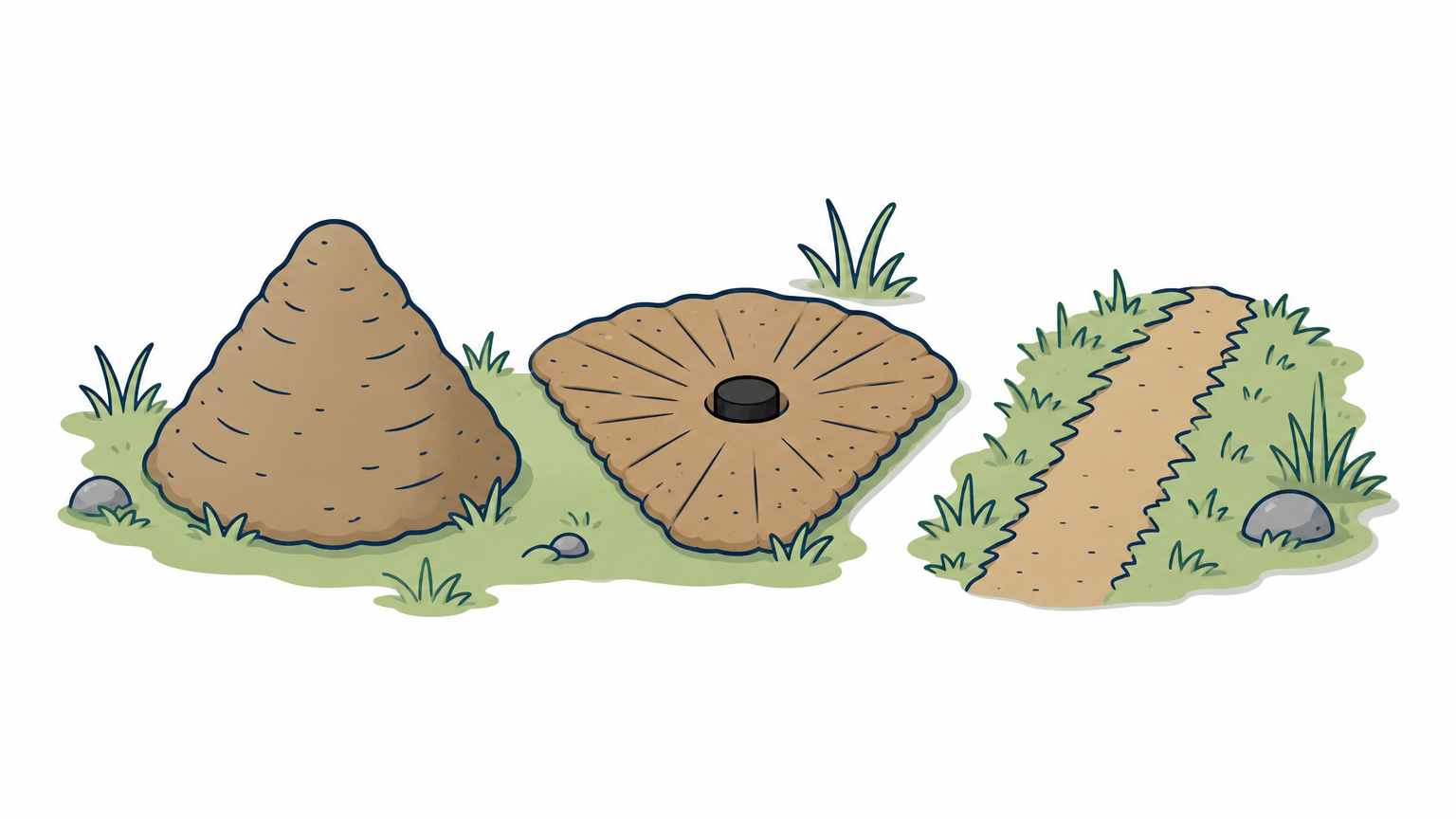
Round, cone-shaped mounds of fine soil, often joined by a raised ridge, point to moles . Gophers push soil into fan-shaped or crescent mounds with a plugged hole off to one side. Voles leave surface runways in the grass and make no mounds at all. Everything below applies to moles only.
Step 1. Find the active tunnels
Only some of the tunnels in your lawn are in use right now, and a trap in an abandoned run catches nothing. Your first job is to map the runs that moles are still traveling.
Use the flatten test
Walk the yard and note every ridge and fresh mound. Press down a 2 to 3 foot section of each ridge with your foot. Then check again that evening and the next morning.
A ridge that has been pushed back up within a day or two is active. A ridge that stays flat is abandoned, so ignore it. Fresh mounds alone don't tell you much, since a mole may have moved on after pushing them up.
A ridge that rises again within a day or two is where your trap goes.
Pick the best trap spots
Choose straight runs over curving, wandering ones. Moles patrol straight routes between feeding areas, and these often run along fences, walkways and driveway edges. A run that links two fresh mounds is another strong candidate.
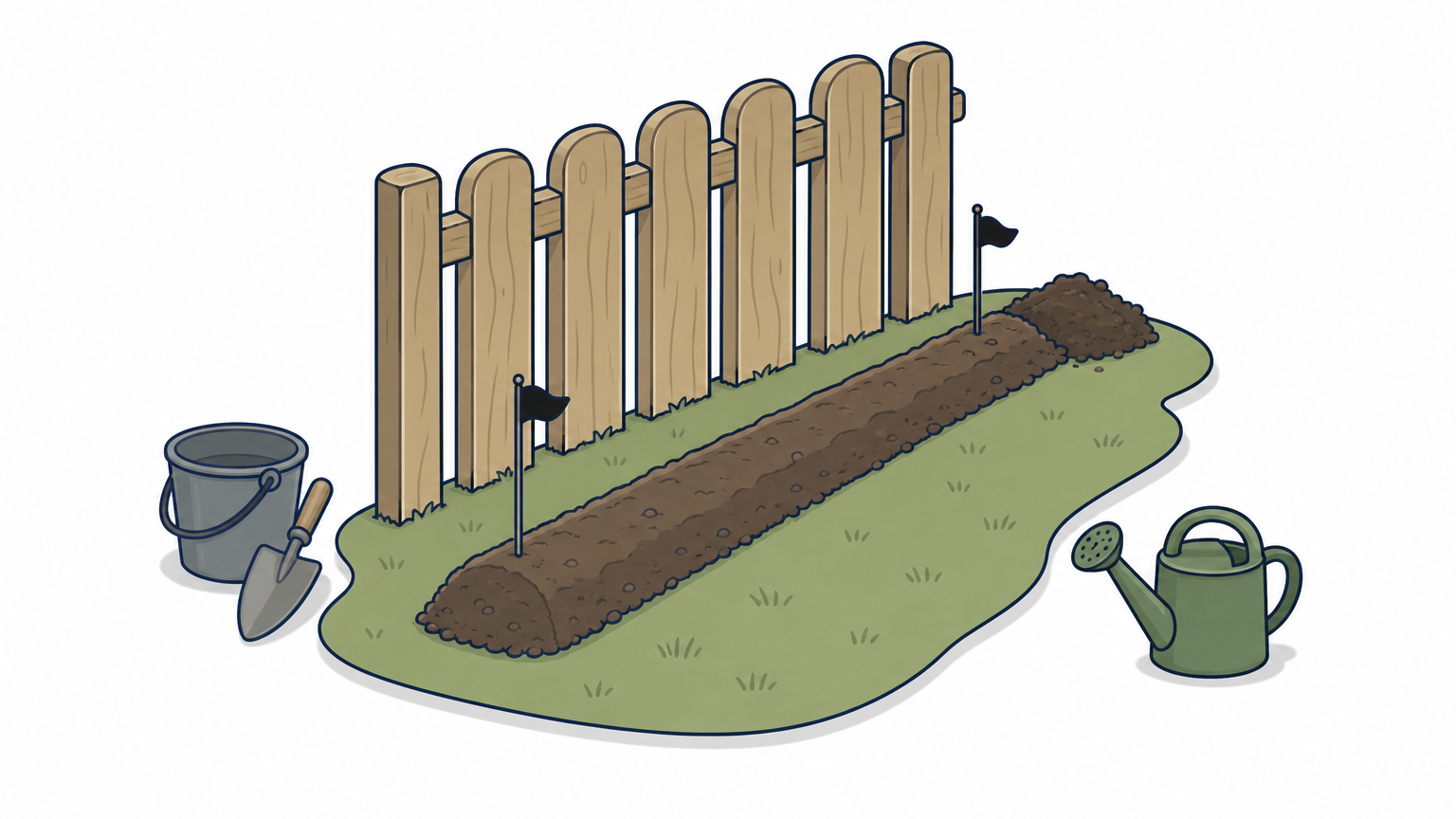
Mark two or three spots with wire flags. Having backups matters, because the first spot you choose is sometimes the wrong one.
Step 2. Choose a method that works
Trapping is the only approach that reliably removes moles. Other options either do not kill moles or work only in limited situations. If you want to kill lawn moles for good, you need something that takes the animal out of the tunnel.
How the common options compare
| Method | Removes the mole? | How well it works |
|---|---|---|
| Traps in active runs | Yes | Most reliable, but needs correct setting and regular checks |
| Poison worm-shaped baits | Only if eaten | Inconsistent, with risks to pets and wildlife |
| Castor oil repellents | No | Mixed. Moles may relocate, and rain washes it out |
| Cutting back grubs and irrigation | No | Helps slightly, weak on its own |
| Buried hardware cloth barrier | Excludes | Works for small beds, impractical for a whole lawn |
| Dish soap, vinegar, mothballs, gum, hair, razor blades | No | Not reliably effective |
| Pinwheels and ultrasonic devices | No | Not reliably effective |
Trapping is the one method here that removes the mole itself.
Why home remedies and baits disappoint
Will Dawn dish soap kill moles? No. A soapy drench does not kill them, and it can stress your grass. Vinegar behaves the same way. University extension guidance lists mothballs, hair, razor blades, gum, pinwheels and ultrasonic gadgets as unproven , and mothballs are a pesticide that is not labeled for this use and can contaminate your soil.
Poison baits have a different problem. Moles hunt live worms and insects, so they often ignore a worm-shaped pellet. Pets and wildlife can eat it instead. Mole Masters uses no poisons or chemicals for this reason.
Step 3. Set traps in active runs
Set your traps in the active runs from Step 1, check them often, and move any trap that has not caught anything in two to three days. This is the core of how to get rid of moles in your grass.
Set the trap
Use the type you chose and follow its instructions exactly. Scissor traps sit inside the run, and harpoon traps sit on the surface with the spike over the tunnel. Traps are dangerous, so keep children and pets away while you work.
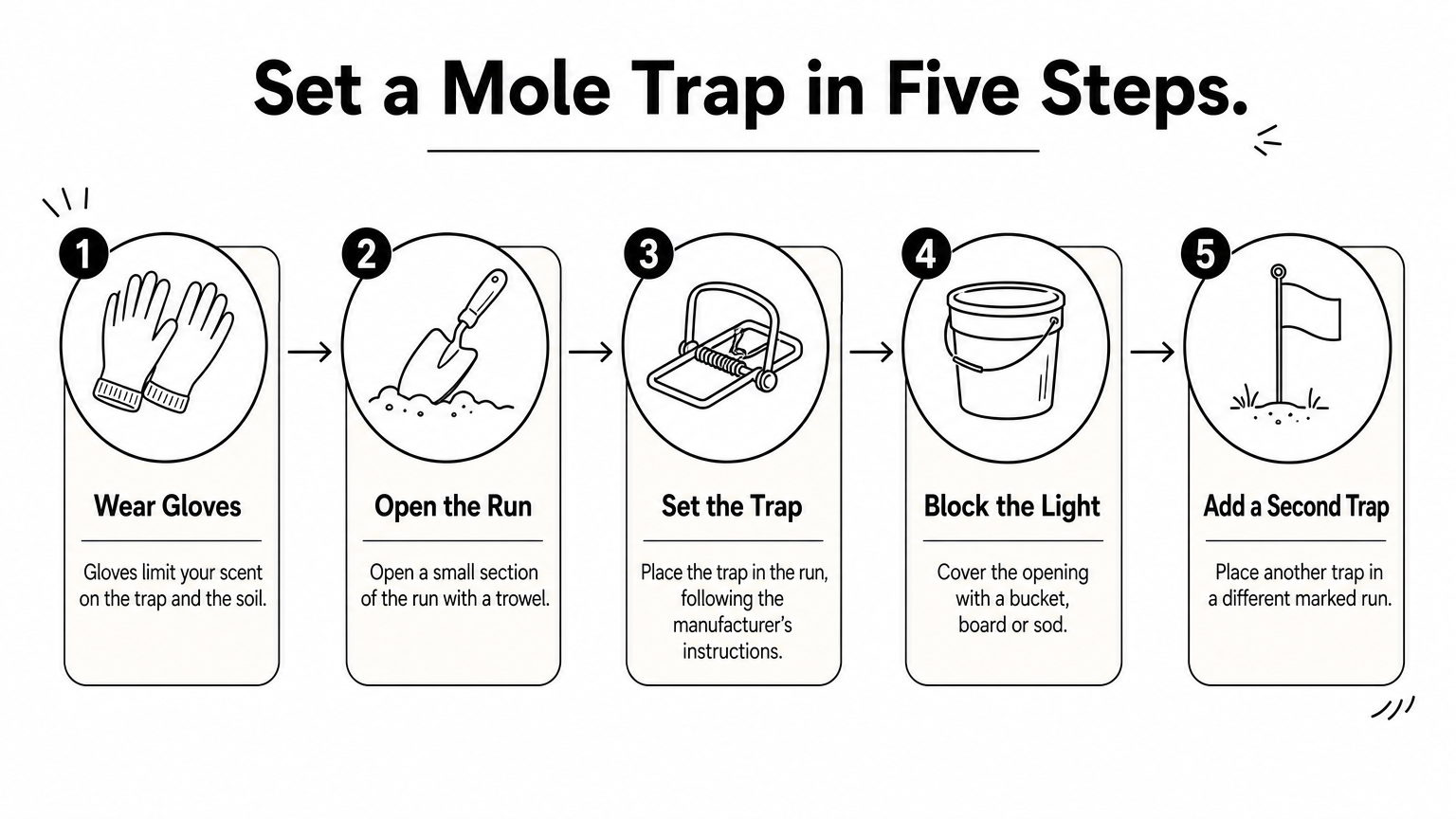
- Wear gloves to limit your scent on the trap and the soil.
- Open a small section of the active run with a trowel, just wide enough for the trap.
- Set the trap in the run, following the manufacturer's instructions.
- Cover the opening with a bucket, board or sod so light doesn't get in. Moles plug daylight leaks and may skip the trap.
- Place a second trap in another marked run.
Check, move and know when to call a pro
Check traps morning and evening. If a trap has had no catch after two to three days , move it to the next flagged run. After a catch, reset the trap in the same run, because another mole may use it.
Some yards are too large or too stubborn for DIY. Mole Masters controls moles with underground devices covered by hard plastic and staked down, with no poisons or chemicals. Its In/Out service is five weekly visits, listed at an "Up-To" price of $395 for a property of half an acre or less, before sales tax. The average client pays $345, and the price drops if the job takes fewer visits. Larger or harder properties can change the estimate, and estimates are free.
Step 4. Repair the grass and keep moles out
Repair the lawn after the trapping is done, because fresh mounds on repaired ground tell you whether a new mole has moved in. Grass usually grows back once the tunnels are filled and the roots can reach soil again.
Fix the tunnels and mounds
Will grass come back after moles? Almost always, if the roots have not been dry for long. Here is the repair routine:
- Collapse ridges by pressing them flat with your foot, then water the area.
- Rake mounds into a thin layer, or shovel the soil into a bucket and spread it where the lawn has low spots. A thick pile will smother the grass underneath.
- Reseed bare patches , keep the seed bed lightly moist, and mow gently until the new grass is established.
Pros who control moles usually focus on removal, and Mole Masters does not generally clean up molehills or repair lawns. Plan on doing this part yourself.
Make the yard less attractive
What kills moles permanently? Nothing does. Trapping clears the moles you have, but others can move into the empty territory, so watch for new ridges after you finish. Overwatering brings worms toward the surface, so water deeply and less often. Hardware cloth buried roughly 2 feet deep can protect a small garden bed.
A repaired lawn is the best early warning system, because a new mound means a new mole.
If moles keep returning, Mole Masters offers Preventative Mole Control and Year Round Mole Control, which add monitoring so that new activity gets caught early.
Getting your lawn back
Moles go after worms, so the fix is to remove the mole rather than scare it. Find the active runs with the flatten test, trap them, skip the remedies that don't work, and repair the turf when the ridges stop coming back. Then keep watching the yard.
If you live in King or Pierce County and would rather hand the job to someone with decades of experience, you can request a free estimate from Mole Masters by form, phone or email.