

Mole Removal in Washington: Methods, Costs, Risks, Healing
Mole removal in Washington means a licensed provider takes a skin mole off by shaving it, cutting it out, or treating it with a laser. It usually takes one short office visit under local anesthetic. A dermatologist has to confirm the mole is benign first. Cosmetic removal often runs a few hundred dollars per mole and is not covered by insurance. The procedure is low risk when a qualified provider performs it.
This guide covers why a diagnosis comes before any removal, how to find and book a provider near Seattle, Tacoma or Issaquah, and how shave, excision and laser methods compare. It also covers what you should expect to pay, how risky the procedure is, and how long healing takes.
One note from us. Mole Masters has controlled the other kind of mole, the animal that tunnels under lawns, across the Puget Sound region since 1991. Searches for "mole removal" mix both meanings. We cover the skin version in full here, and we point you to the right place if your problem is in the yard.
Why mole removal starts with a diagnosis
Mole removal starts with a diagnosis because the first question is whether the mole is safe to leave alone, not how to get rid of it. A dermatologist answers that with an exam, and sometimes a lab test, before anything touches your skin.
Medical, practical and cosmetic reasons to remove a mole
Most moles are benign, and people have them removed for three reasons. A medical reason is a mole that looks suspicious or has changed. A practical reason is a mole that snags on a bra strap, razor, collar or watchband. A cosmetic reason is that you simply dislike how it looks, often on the face.
The reason matters for two things. It influences which method the provider chooses, and it decides whether your insurance pays. Medical removals can qualify for coverage, while purely cosmetic ones generally do not.
Warning signs that deserve a skin check
Dermatologists use the ABCDE checklist to screen moles for melanoma, the serious skin cancer you are trying to rule out. Check yourself monthly and photograph any mole you worry about so you can compare over time.
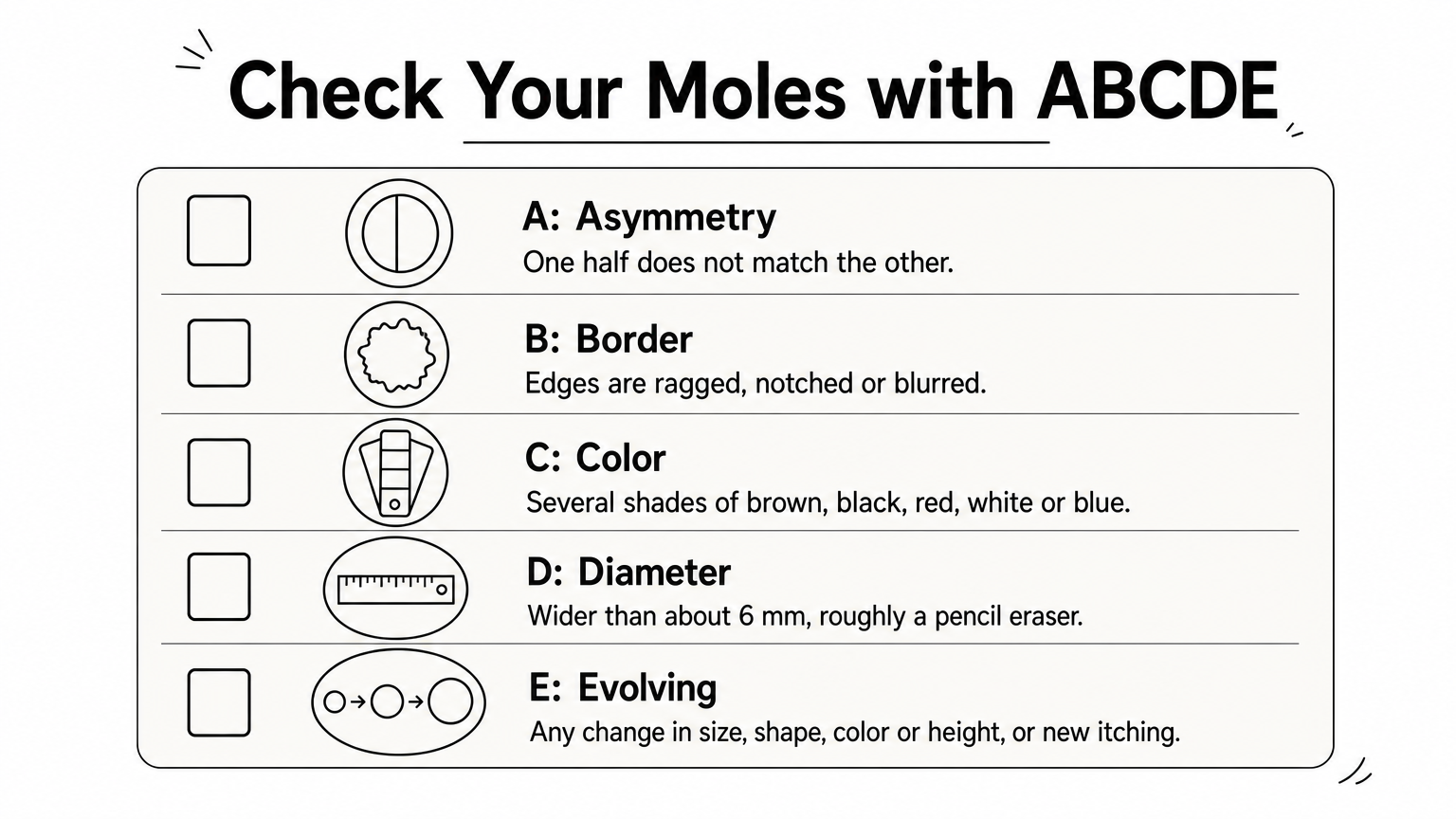
- Asymmetry: one half does not match the other.
- Border: edges are ragged, notched or blurred.
- Color: several shades of brown, black, red, white or blue in one mole.
- Diameter: wider than about 6 mm, roughly a pencil eraser.
- Evolving: any change in size, shape, color or height, or new itching, bleeding or crusting.
A mole that is changing needs a dermatologist's exam before it needs a removal method.
Skin moles and yard moles are different jobs
If the mounds are in your lawn instead of on your skin, you need a different kind of professional. Mole Masters does nothing but yard moles. We use underground devices with no poisons or chemicals, and we give a free "Up-To" estimate showing the most you could pay, so the final price can only come in lower.
We do not treat skin moles, and no pest company should. If you are in Seattle, Gig Harbor, Puyallup, Issaquah, or King or Pierce County and see tunnels in the grass, call us. If you see a changing spot on your arm, call a dermatologist.
How to get a mole removed in Washington
To get a mole removed in Washington, book an exam with a board-certified dermatologist, let them decide whether the mole is benign, then choose a method and have the procedure done in the office. Most people need one appointment, sometimes two.
Find a licensed provider near you
Whether you live in Seattle, Issaquah, Puyallup or Gig Harbor, check credentials before you book. Look for board certification in dermatology through the American Board of Dermatology. Confirm the provider holds an active license using the Washington State Department of Health's provider credential search. Ask whether they send every removed mole to a pathology lab.
Call your insurer too. Some plans require a referral from your primary care provider before you see a specialist, and some plans cover only removals that are medically necessary.
What the visit and procedure involve
Expect the process to run in this order:
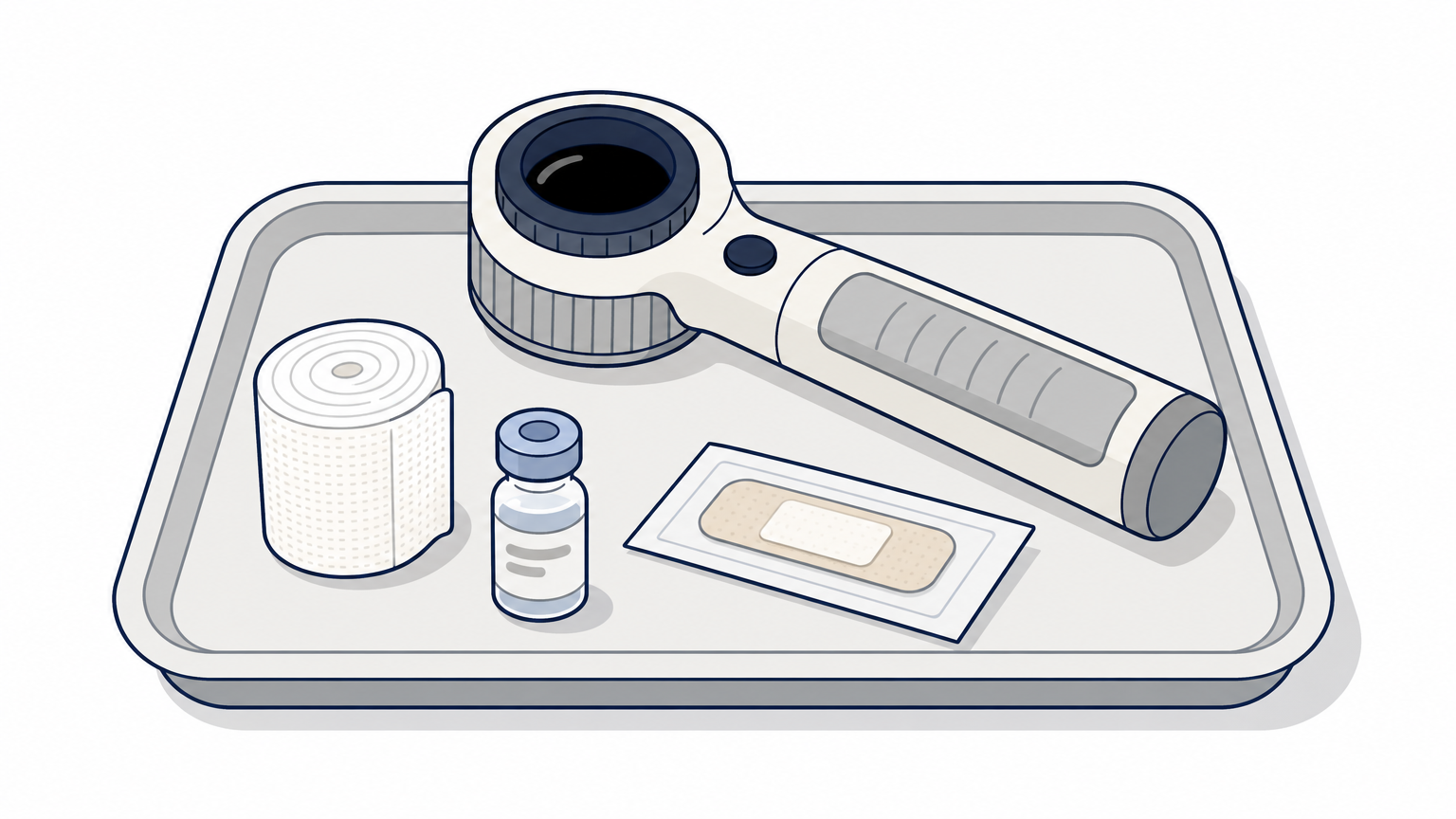
- Exam. The dermatologist looks at the mole, often with a handheld magnifier called a dermatoscope, and decides whether it is benign and suitable for removal.
- Method choice. You discuss shave, excision or laser based on the mole's depth, size and location.
- Numbing. The area is cleaned and numbed with a local anesthetic. You feel a pinch, then pressure without pain.
- Removal. The procedure itself typically takes about 15 to 30 minutes.
- Pathology. Tissue from shave and excision goes to a lab. Some practices bill this separately.
- Aftercare. You leave with a bandage and written instructions, and stitches are scheduled for removal if you have them.
Questions to ask before you book
A short list saves surprises later. Ask whether the exam is billed to insurance separately from the removal, and what the per-mole fee includes. Ask which method they recommend and why, what scar you should expect, and whether pathology is included. Finally, ask who handles complications and how to reach them after hours.
Book the exam first and the removal second, because the exam decides everything else.
Mole removal methods compared
Four methods cover nearly every mole removal: shave excision, surgical excision, laser treatment and cryotherapy (freezing). Your dermatologist picks based on how deep the mole goes and whether any part of it looks suspicious.
Side-by-side comparison
| Method | Best for | Stitches | Scarring | Tissue tested? |
|---|---|---|---|---|
| Shave excision | Raised moles that sit near the surface | No | Usually a flat, pale mark | Yes |
| Surgical excision | Deeper or larger moles, anything doubtful | Yes | Fine line scar | Yes |
| Laser | Small, clearly benign moles, often on the face | No | Usually minimal | No |
| Cryotherapy | Small, clearly benign spots | No | Variable | No |
How to choose between them
Shave excision flattens the mole to skin level. It suits raised moles, but the goal is to level the mole, not always to remove every cell below the surface, so a mole can grow back. Surgical excision cuts out the whole mole and closes the wound with stitches. It is more invasive and leaves a line scar, but it is the usual choice for deeper or more doubtful moles.
Lasers work well in places that are hard to approach with a blade, such as the nose, lips and ears. They can also clear several small facial growths in one session. Because a laser destroys pigment instead of lifting out a sample, nothing goes to the lab. That is why the dermatologist must be sure the mole is benign beforehand. Many dermatologists avoid freezing dark moles for the same reason.
Why creams and DIY removal are a bad idea
Skip mole removal creams, acids and home cutting. They can scar, cause infection, and leave pigment cells behind. They also destroy the evidence a pathologist needs. A mole you thought was harmless could be the one that needed testing.
Any method that destroys a mole without sending a sample to the lab should only be used on a mole already confirmed benign.
What mole removal costs and what insurance covers
Cosmetic mole removal usually costs a few hundred dollars per mole, and insurance generally does not pay for it. Removal that is medically necessary is handled differently, so what you pay depends on why the mole is coming off.
Typical price ranges
Published prices vary widely. One East Coast dermatology practice lists roughly $250 to $500 per mole , depending on technique. Another lists $150 to $1,600 or more , depending on size, location and method. Those figures come from practices outside Washington State, so treat them as a rough benchmark and get a written quote from a Seattle, Tacoma or Eastside practice.
A worked example shows how it adds up. Say you have three raised moles on your back shaved off at the $250 to $500 benchmark. That is $750 to $1,500 for the removals. The pathology fee and the exam visit come on top, usually billed separately.
What moves the price
Several things push a quote up or down:
- Method: a simple shave usually costs less than an excision with stitches.
- Size and location: facial and large moles take more time and care.
- Number of moles: some practices discount multiple moles in one session.
- Pathology: the lab fee is often separate from the procedure fee.
- Exam: the first visit is typically billed as a regular medical visit.
Insurance coverage
Insurance usually covers the exam and removal when a mole is suspicious, bleeding, or repeatedly irritated, and does not cover purely cosmetic work. Coverage rules differ by plan, so ask your insurer before you book. Payment for cosmetic removals is typically collected at the time of service.
Ask for the per-mole fee, the pathology fee and the exam fee as three separate numbers.
How risky mole removal is and what healing looks like
Mole removal is low risk. The common downsides are redness, a scar and some tenderness, while infection and regrowth are uncommon. The bigger danger is skipping the exam and removing a mole that should have been tested.
Risks to know about
Complications are uncommon, but you should know the list. Scarring varies with method, location and your skin. Infection is rare and mostly preventable with wound care. Bleeding and bruising are more likely if you take blood thinners, aspirin or certain supplements, so tell your provider before the day. You can also see pigment changes (a lighter or darker patch) and, after a shave, recurrence of the mole.
Healing timeline and aftercare
Shave and laser sites typically heal in about one to two weeks. Excision sites take longer, with stitches commonly coming out within one to two weeks depending on location. The scar keeps maturing for a few months. Follow your provider's instructions, and in general:

- Keep the area clean and covered as directed.
- Do not pick scabs.
- Apply any prescribed ointment.
- Protect the site from sun, since UV can darken a scar.
When to call your provider
Call if you notice spreading redness, pus, increasing pain, a fever, or bleeding that does not stop with pressure. Also call if dark pigment reappears where the mole was, or if the pathology report came back with anything other than "benign." Do not wait for your next scheduled visit.
Most of the risk in mole removal sits before the procedure, in whether anyone checked the mole.
Where to go from here
Mole removal in Washington comes down to a short path. Get the mole examined, let a board-certified dermatologist pick the method, send the tissue to a lab when possible, and budget a few hundred dollars per mole if the removal is cosmetic. Heal with clean wound care and sun protection, and you will usually be done within a few weeks.
If you came here because of mounds and tunnels in your lawn, that is our job. Mole Masters has handled yard moles in King and Pierce counties since 1991, with no poisons and no chemicals. You can request a free estimate from Mole Masters by form, phone or email, and you will see the most you could pay before any work starts.