

Yard Mole Removal with Castor Oil: How to Mix and Apply It
Yard mole removal with castor oil is a repellent approach, not a removal method, and the results are modest at best. To try it, mix three parts castor oil with one part dish soap, stir four tablespoons of that concentrate into a gallon of water, and soak the soil around fresh mounds and active tunnels. Repeat every few weeks and after heavy rain. If new mounds keep appearing after two weeks, castor oil is not solving your problem.
You probably landed here because your lawn is covered in fresh mounds and castor oil sounds cheap, simple, and safe for pets. Then you read the reviews. One homeowner says the yard has never looked better. Another says it did nothing and tells you to trap or bait instead. Both reports are believable, because mole pressure, soil, and weather differ from one yard to the next.
Mole Masters has done nothing but mole control around Seattle, Tacoma, and the rest of the Puget Sound region since 1991, and many of our customers tried store products before they called. This guide covers whether castor oil is worth your time, then walks you through four steps: identify the animal, pick a mix, apply it, and test the result.
Does castor oil really move moles out of a yard?
Castor oil might push moles toward another part of your property, but the evidence that it removes them is thin. A Nebraska Extension publication on mole control says castor oil products have shown only minor effectiveness in repelling the eastern mole. Moles around Seattle and Tacoma are different species, yet they hunt the same food, so there is little reason to expect better odds.
Why people expect it to work
The theory is that castor oil gives soil a taste and smell that earthworms and grubs avoid, so moles lose their food and leave. Moles eat earthworms and insects, not roots , so your lawn is a pantry to them. A repellent has to outweigh a full pantry, and a drench in wet Puget Sound soil thins out fast.
Product pages claim the oil repels moles, voles, gophers, skunks, and even armadillos. Treat that list as a sales claim, not field data.
What results to expect
Results depend on how many moles you have and how much food your soil holds:
- Light pressure, one or two mounds: activity may shift elsewhere for a few weeks.
- Heavy pressure or moles next door: new tunnels often reappear within days.
- Any yard: the oil never catches or removes a mole that is already working your tunnel system.
Castor oil can make a yard less appealing to moles, but it cannot remove one.
Step 1. Confirm moles and mark active tunnels
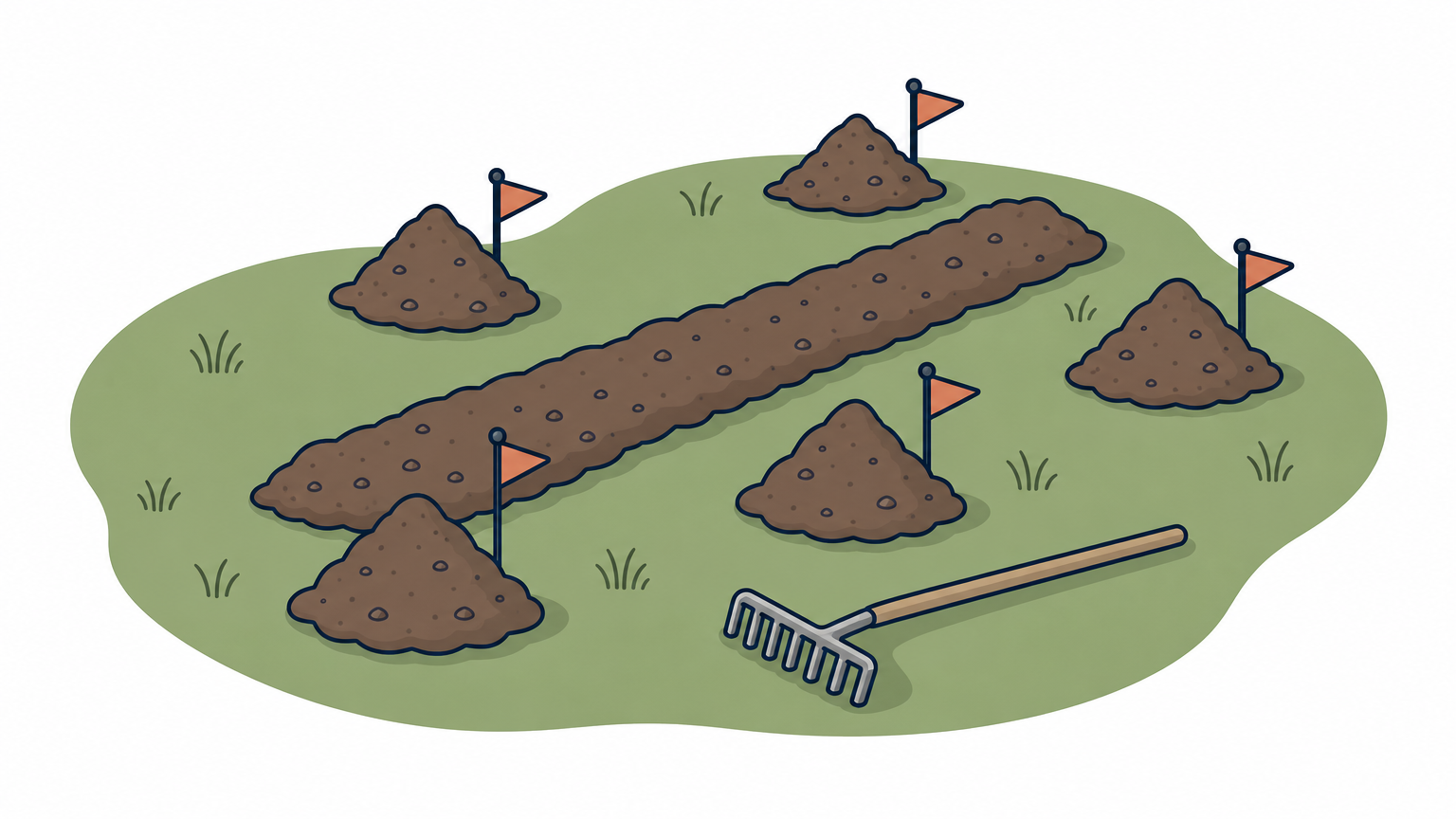
Confirm that moles are the culprit before you spend anything. Moles leave soft mounds of loose soil with no open hole, while other burrowers leave different signs, and a repellent aimed at the wrong animal wastes your time.
Tell moles from voles and gophers
| Animal | What you see |
|---|---|
| Mole | Round or cone-shaped mounds of fine soil, raised ridges across the lawn, no open hole |
| Vole | Surface runways in the grass, open holes an inch or two wide, no mounds |
| Pocket gopher | Fan or crescent-shaped mounds with a plugged hole on one side |
Chewed roots, bulbs, or bark point away from moles. Moles tunnel after worms and do not eat plants.
Flatten mounds and flag active runs
Rake the mounds flat and press down a few raised ridges with your foot. Check again after 24 to 48 hours. Rebuilt ridges and fresh mounds mark the active runs, so push a flag beside each one. Old, dry, crusted mounds are abandoned.
Count the fresh mounds and write the number down. That count is your baseline for Step 4.
Treat only the tunnels that moles rebuild, because those are the ones in use.
Step 2. Choose a DIY mix or a ready-made repellent
Choose the DIY mix if you want a low-cost test, and a ready-made product if you want label directions. Both rely on the same ingredient, so the choice comes down to convenience and control.
Mix the DIY concentrate
Use plain castor oil and plain liquid dish soap. The soap lets the oil blend with water instead of floating on top. The ratio is three parts oil to one part soap:

- 6 fl oz castor oil
- 2 fl oz liquid dish soap
Shake or blend until the mixture turns milky. That makes 8 fl oz of concentrate, or 16 tablespoons. Each gallon of finished spray takes four tablespoons of concentrate, so one batch makes four gallons . Label the bottle and keep it away from children and pets.
Compare DIY with ready-made
| DIY mix | Ready-made repellent | |
|---|---|---|
| Setup | Buy oil and soap, blend it yourself | Dilute or spray per the label |
| Strength | You set it, so mixing errors are possible | Set by the manufacturer |
| Cost | Usually lower per gallon of spray | Usually higher |
| Best for | Small yards and a two-week test | Anyone who wants printed directions |
If you buy a ready-made product, follow its dilution and reapplication rates instead of the DIY numbers above.
Pick the version you will actually reapply, because one treatment is not enough.
Step 3. Apply the mix to the lawn
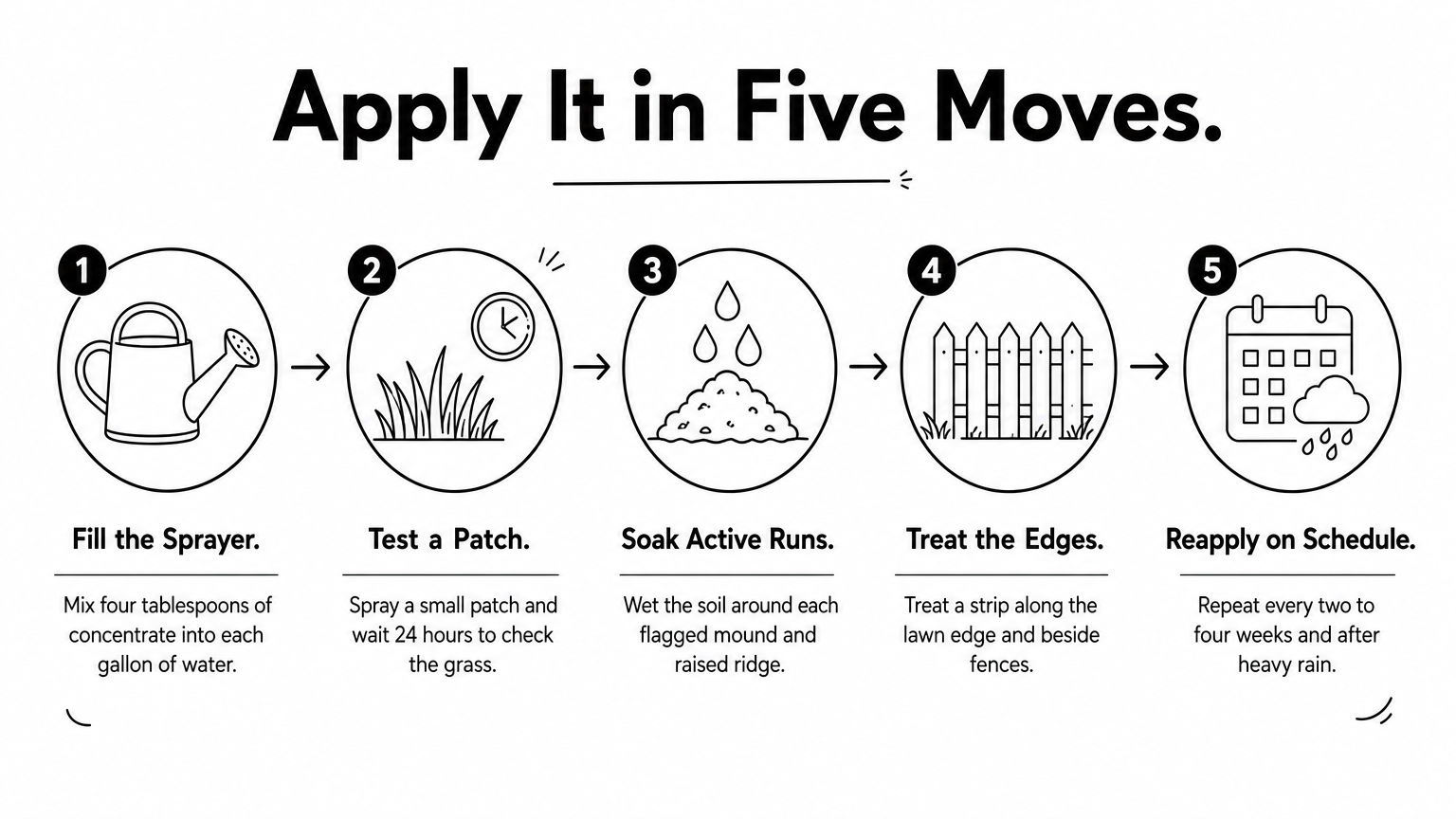
Apply the diluted mix to the soil around your flagged tunnels on a day with no rain in the forecast for 24 hours. Rain washes the oil out before it can do anything, which matters in the Seattle and Tacoma area.
Apply it in five moves
- Fill a watering can or hose-end sprayer with the diluted mix, four tablespoons of concentrate per gallon of water.
- Test a small patch of lawn first and wait 24 hours to make sure the soap does not stress the grass.
- Soak the soil around each flagged mound and along the raised ridges until the surface is wet.
- Treat a strip along the lawn edge and beside fences, where moles often enter.
- Reapply every two to four weeks and after heavy rain, following the product label if you bought one.
Keep pets, kids, and plants safe
Castor oil is a laxative, so a dog that laps up wet soil may get an upset stomach. Keep pets off the treated area until it dries. Refined castor oil from a bottle is not the same as castor beans, which are toxic, so never crush beans or plant castor bean shrubs as a mole repellent.
Soak the active runs, not the whole yard, and repeat on schedule.
Step 4. Check results and decide what comes next
Judge the treatment after two weeks by recounting fresh mounds. If you have no new mounds after 14 days, keep up the reapplication schedule. If fresh mounds appear within a week or two, stop buying oil, because the repellent is not holding these moles.
Read your results
Flatten every mound and ridge again, then check at 48 hours, one week, and two weeks. Compare each count with your Step 1 baseline. Fewer mounds in fresh spots, not just moved ones, means some effect. Mounds that simply shift to untreated lawn mean the moles are walking around your oil.
Know when to switch methods
Switch methods when damage grows, when new tunnels appear every week, or when moles keep returning after each treatment. Poison baits carry risks for pets and wildlife, so they are a poor fallback. Trapping or a professional service is what actually catches moles.
Mole Masters uses underground devices with no poisons or chemicals. Our In/Out Mole Control runs five weekly visits, with an "Up-To" quote of $395 and an average client spend of $345. That price is based on a property of half an acre or less and excludes sales tax, and it drops if we can pull out early. Estimates are free.
If castor oil has not cut your fresh mounds in two weeks, change methods instead of repeating it.
Is castor oil worth a try?
Castor oil is worth a two-week test if you have light mole activity and want a pet-conscious, low-cost first step. Mix three parts oil to one part dish soap, use four tablespoons per gallon, soak the flagged tunnels, and count your mounds before and after. Do not expect it to remove moles that have settled into your lawn.
If the count has not dropped, you have your answer and have lost little. For a lasting fix, request a free estimate from Mole Masters and we will tell you what your yard needs.