

Lawn Mole Control: 4 Steps to Stop Mounds and Tunnels
Good mole control lawn care comes down to four steps: confirm that moles (not voles) are the problem, map where they are active, choose a method that is legal in Washington, and keep monitoring until fresh mounds stop appearing. You can do the work yourself with a spade, a broomstick and some patience. You can also hand it to a licensed professional when the yard is large or the moles keep returning.
The trouble is that the usual advice fails in western Washington. Store-bought poisons and gadgets give inconsistent results, relocating moles is against the law, and some of the traps people recommend online may not be legal to use here. Porous, well-watered soil is close to ideal mole habitat, so when one mole leaves, another often takes over its tunnels.
This guide walks through the process in order, from identifying the animal to choosing a method, deciding whether to hire help and checking that the job is done. Mole Masters has done nothing but mole control in the Puget Sound region since 1991, so you will also see where professional service pays off and where a DIY approach is enough.
Why moles keep returning to Puget Sound lawns
Moles keep coming back because western Washington gives them soft, porous soil, steady moisture and plenty of worms. The two species that damage Seattle-area lawns are the Townsend's mole and the Pacific mole. Neither is a rodent.
What moles do to your lawn
Moles damage lawns by tunneling, not by eating grass . As they dig, they push up mounds or ridges that smother small plants, expose roots to dry air and cover sprinkler heads. Tunnels can also uncover shallow irrigation lines and give voles and mice a path to roots. Uneven ground is a trip hazard as well.
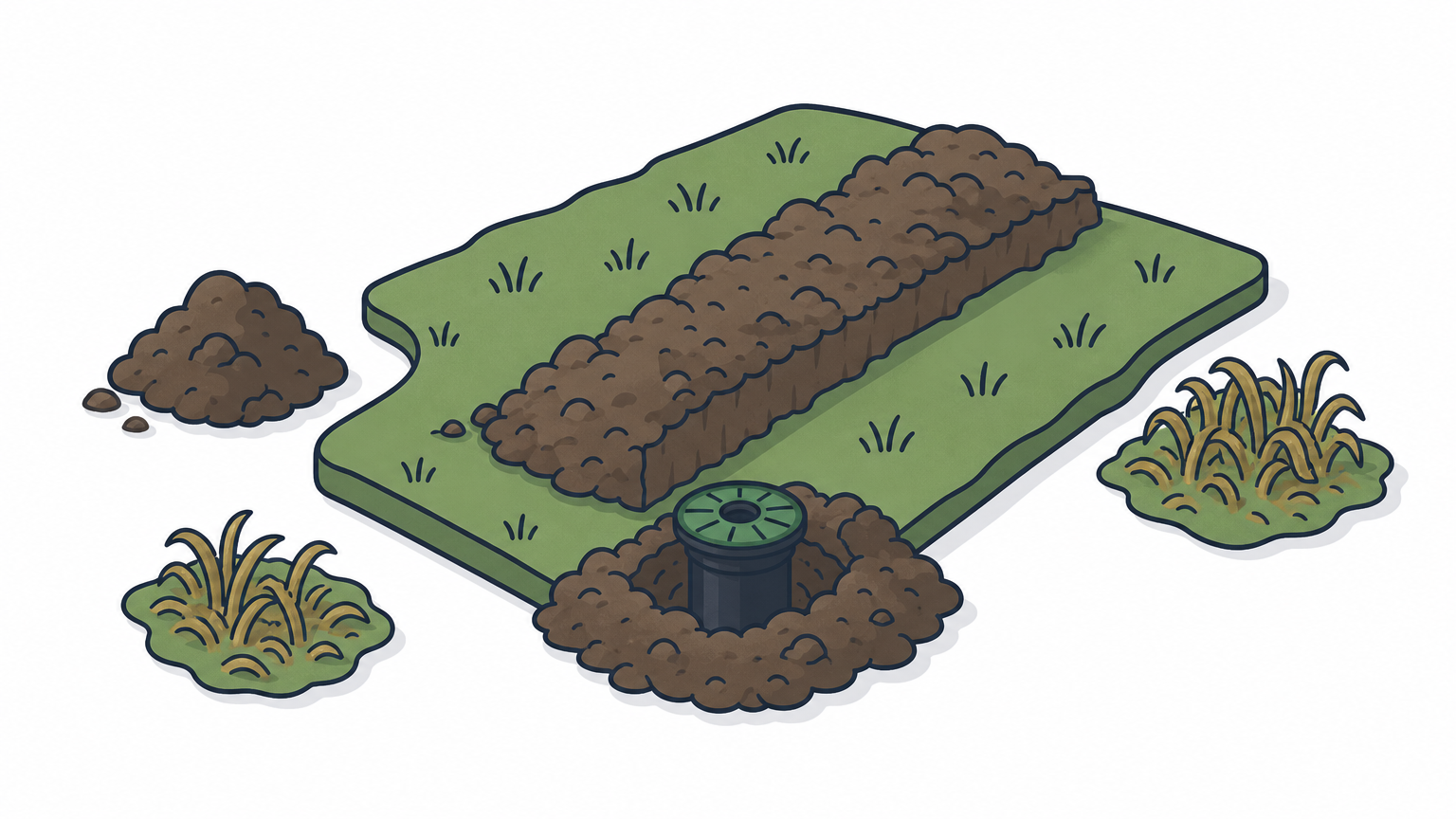
Timing matters. Moles stay active all year, but mounds peak in spring and fall . Females give birth in April or May, and the young leave about four weeks later to dig their own tunnels nearby. A small problem can therefore spread through a neighborhood in a season or two.
Size matters too. One mole's territory averages about 2/5 acre, roughly a 132-foot square, which is larger than many suburban lots. A single animal can work under several yards at once, and a dead mole's tunnels are often taken over by a neighbor mole .
Moles do their damage by digging, so you are managing tunnels as much as animals.
The rules that shape your options
Washington law limits which methods you can use, so check the rules before you buy anything. Based on Washington State University (WSU) Extension guidance:
- Relocation is illegal. You cannot move wildlife off your property, and live traps seldom catch moles anyway.
- Body-gripping and body-piercing traps are off the table. Voters outlawed their use in 2000. They are legal to own but not to use. Scissor and harpoon designs fall into this group, so confirm before you buy one.
- Registered baits exist. Zinc phosphide and bromethalin baits are sold for home use, but results are inconsistent and you must follow every label direction.
Killing a mole in your own yard is not banned outright. WSU lists digging one out and killing it humanely among its methods. For anything unclear, check the Washington Department of Fish and Wildlife's mole page or call the agency.
Step 1. Confirm moles and map the activity
Before you treat anything, confirm that moles are the culprit and find the tunnels they are using right now. Treating the wrong pest or the wrong spot wastes weeks, and moles do not use their whole tunnel system at once.
Make sure it is moles, not voles
Adult Townsend's and Pacific moles are 6 to 9 inches long. They have velvety black fur , very small eyes, no visible ears, huge front feet and a short pink tail. You will rarely see one above ground.
Voles are the usual look-alike. They are burrowing rodents with dark tails and small front feet. Gnawed flower bulbs and chewed roots are usually vole work, not mole work, and they need a different plan.
Find the active tunnels with the broomstick test
Moles abandon some tunnels and keep using others, so you need to know which are live. This takes about a week and costs nothing:
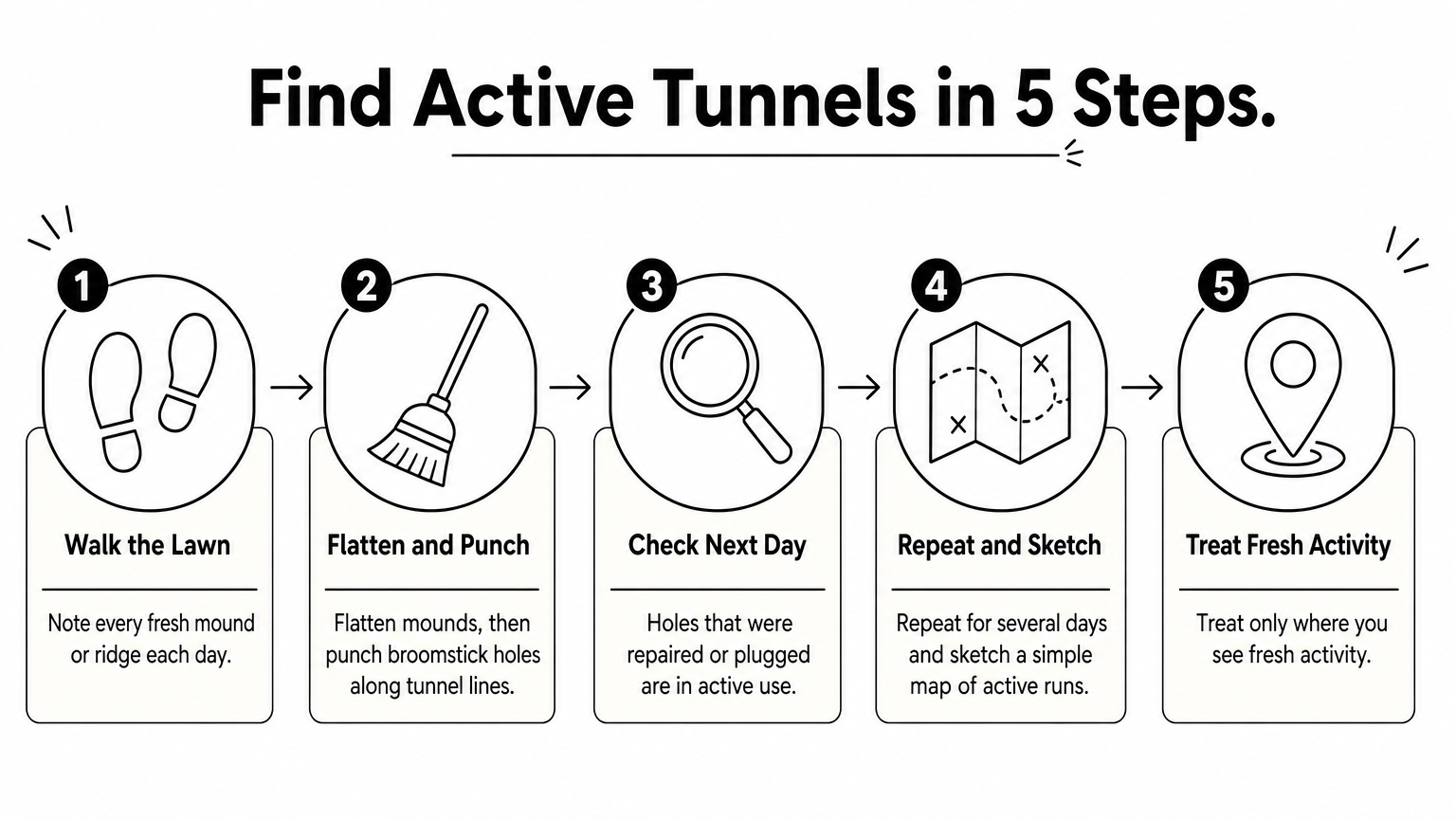
- Walk the lawn each day and note every fresh mound or ridge.
- Flatten the mounds, then use a broomstick to punch holes along the tunnel lines and in the mounds.
- Check the next day. Holes that have been repaired or plugged are in active use.
- Repeat for several days and sketch a simple map of the active runs.
- Treat only where you see fresh activity. Tunnels along sidewalks, fences and other uncompacted ground are common hot spots.
Keep the sketch. You will use it again in Step 4 to judge whether your method worked.
Treat only the tunnels that get repaired, because old runs tell you nothing about the mole you have now.
Step 2. Choose a legal method for your yard
The best DIY option for most lawns is to flatten mounds and dig out the mole when it pushes soil back up. Everything else is either situational, inconsistent or unavailable under Washington law.
Compare the do-it-yourself options
This table sets out what WSU Extension reports for each method.
| Method | How it works | Verdict |
|---|---|---|
| Rake and live with it | Rake mounds flat, remove the loose soil | Free, and moles eat crane fly larvae, cutworms and some slugs |
| Stomp and dig | Flatten mounds, dig up the mole when it rebuilds | Works with timing, humane if done quickly |
| Flushing | Pour several large buckets of water into active holes at once | Needs helpers, weak in sandy soil |
| Fencing | Buried barrier around the lawn | Practical only for very small lawns |
| Baits | Zinc phosphide or bromethalin products | Inconsistent, may take weeks |
| Castor oil repellents | Applied to soil | Not proven on western species |
| Sonic devices | Vibrating stakes | Generally ineffective |
| Body-gripping traps | Spring-loaded kill traps | Use is illegal in Washington |
If you can tolerate a few mounds, raking is a fair answer to why you might not want to kill moles at all. Do not just stomp the mounds and walk away, though, because the mole will push the soil right back out.
Use stomp and dig in spring and fall
Mounds appear fastest in spring and fall, so that is the time to act. Flatten every mound in the active area. When fresh soil pushes up again, you know where the mole is working, so dig it out quickly with a spade. A sharp blow with the shovel is the humane way to finish the job.

Fencing is the other physical option, and it only suits a small lawn. Dig a trench 18 to 24 inches deep , set in aluminum sheeting or ¼-inch galvanized hardware cloth, and bend the bottom few inches outward. Leave about six inches above ground where it will not be a hazard, then backfill. A fence will not remove moles already inside, and some will tunnel underneath. Check inside the fence line after you finish.
Choose methods that match the size of your lawn, because a method that suits a 2,000-square-foot yard will not cover a half acre.
Step 3. Decide whether to hire a mole pro
Hire a professional when your lawn is large, the moles return after your own efforts, or you do not want to spend several days a week on mole patrol. A good mole exterminator near you will quote a price, limit the visits and explain exactly what the devices do.
Signs it is time to call someone
Call when the mounds keep reappearing after two or three weeks of the broomstick test and digging. Call when the lawn is bigger than a small yard, since one territory averages 2/5 acre. Call too if you have already tried poisons or bait without luck, which is the story many Mole Masters customers tell before they phone.
What mole control costs
Pricing varies by property size and difficulty, so treat any figure as a starting point. Mole Masters' In/Out Mole Control is quoted at an "Up-To" price of $395 for a half acre or less. That covers five weekly visits and excludes sales tax. The company says its average client spends $345.
Here is a worked example. A 1/2-acre lot in Issaquah or Puyallup would be quoted up to $395, or about $79 per visit across five visits. A typical client pays about $50 less, near $345, because the final price drops when the job takes fewer visits or is easier than expected. There is no extra charge per mole caught. Larger or harder properties cost more, and the price figure was last updated on 9/1/23, so confirm it with a free estimate.
Mole Masters offers four services, and each fits a different situation:
| Service | Best for |
|---|---|
| In/Out Mole Control | An active problem, for new or returning clients |
| Preventative Application | Stopping infestations before they start |
| Year Round Mole Control | Constant problems, or maintenance needed beyond eight months |
| Tunnel Clear Application | Clearing and repairing tunnels so other pests cannot use them |
How to vet a mole exterminator
Ask every company the same questions before you sign:
- Are you licensed and insured?
- Will I get a written estimate with a maximum price?
- How many visits does the job usually take?
- Do you use poisons or chemicals, or contained devices?
- What happens if moles return, and is there a warranty?
- Do you repair the lawn or clean up mounds? Mole Masters generally does not, so budget for that yourself.
Read recent Google, Yelp and Facebook reviews for comments about moles specifically, not general service.
Get a written maximum price and a visit count before work starts, because that is what separates a quote from a guess.
Step 4. Verify results and keep moles out
You know the job is done when you find no fresh mounds and no repaired holes for several weeks after treatment. Any new mole activity means the strategy has failed or a new mole has moved in.
Confirm the moles are gone
Go back to your sketch from Step 1. Keep punching broomstick holes along the old runs and see whether any are repaired again . A lawn with no new mounds is not proof, since moles may still be present, which is why sonic devices are hard to judge. Only the broomstick test tells you whether tunnels are still in use.
If activity returns, treat only the fresh spots. WSU recommends rotating methods until you are satisfied, and reinvasion is common even after success.
Repair the lawn and watch for newcomers
Rake the leftover mounds flat and remove the displaced soil, then fill depressions and reseed bare patches. Watch the lawn closely each spring and fall , when young moles disperse and mounds peak. Territories ignore property lines, so a neighbor's mole problem can become yours.
Year-round service can make sense if you face constant pressure. Mole Masters recommends it when maintenance is needed for more than eight months, and it does not usually advise starting there. If the lawn is small, a buried fence can finish the job of keeping newcomers out.
A mole-free lawn stays that way only if you keep checking it through spring and fall.
Putting your mole plan into action
Lawn mole control works when you identify the animal, map the live tunnels, use only legal methods and then check your results with the same broomstick test. Raking and stomp-and-dig suit small, tolerable problems. Large lawns, repeat invasions and a limited amount of spare time all point toward professional help.
If you want a local team to take over, request a free Up-To estimate from Mole Masters. You can use the contact form, email or phone, and the office will look up your address if you are unsure it is in the service area.