

5 Best Mole Traps That Work in Seattle-Area Yards, Compared
The best mole traps that work are scissor-jaw traps for most homeowners, half-tunnel traps for people willing to learn to tune them, and Talpex-style traps for moles that keep dodging everything else. Harpoon traps are the easiest to set but only suit shallow, visible runs. Whichever you pick, a well-built trap in an active tunnel beats a fancy trap in an abandoned one.
If you are looking at fresh mounds and wondering what the best mole traps are, the hard part is that most traps look alike on the shelf. Cheap copies with weak springs nip a mole instead of killing it, and a nipped mole turns trap-shy. That is how one bad purchase turns into months of mounds.
Mole Masters has done nothing but mole control in the Pacific Northwest since 1991, so we know which devices hold up in wet, often stony Puget Sound soil. Below you get five trap types in the order we would recommend them, then a section on choosing, placing and knowing when to hand the job to a pro.
1. Scissor traps, the best pick for most homeowners
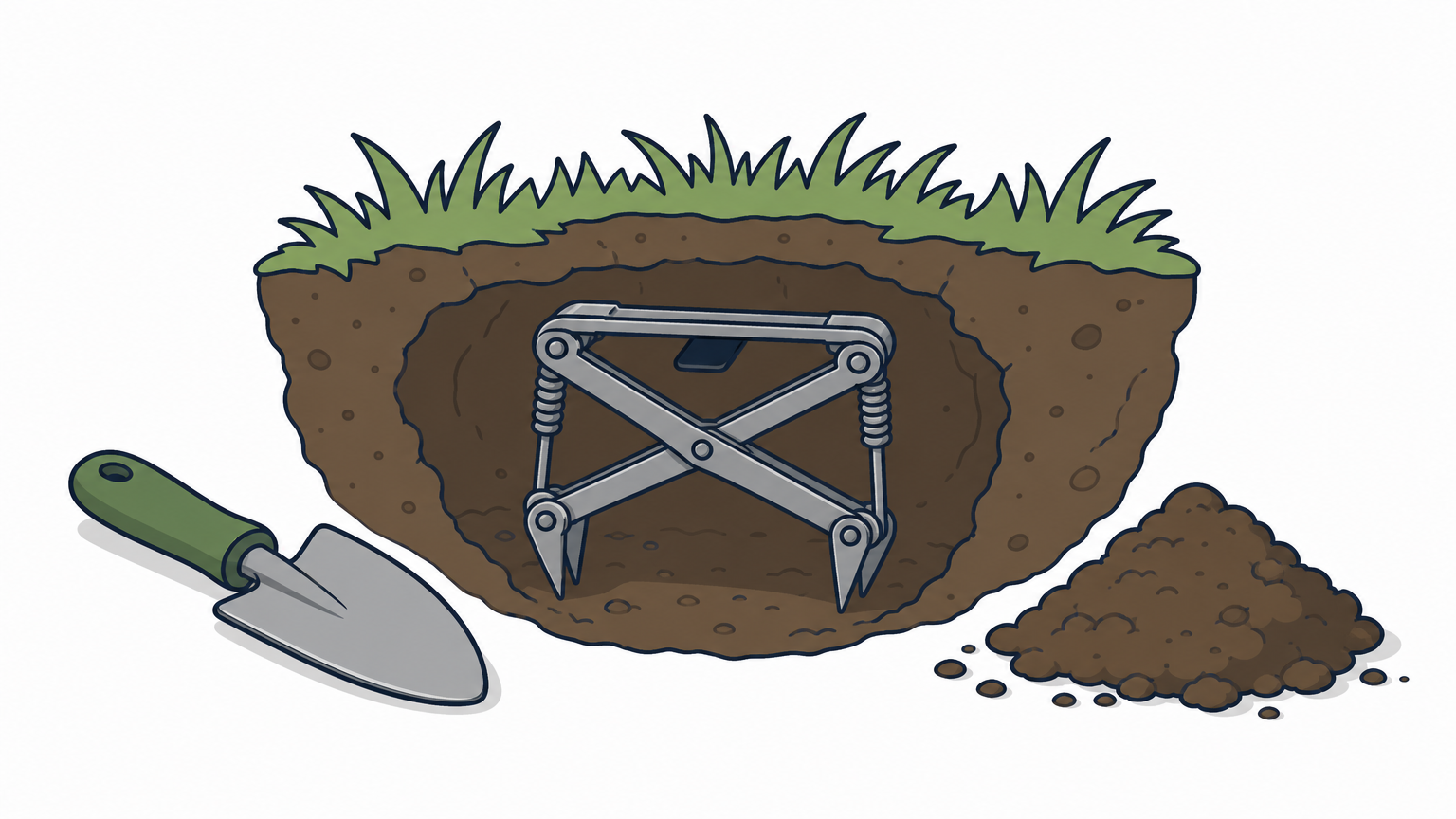
A scissor trap is the best starting point for most yards because it is simple to set, easy to find and effective in most runs. It is also the type you will see most often at hardware stores.
How it works and what it does well
You dig out a section of an active run, set the jaws around a small plug of soil, and cover the hole. When the mole pushes through, the trigger releases and two sets of jaws close on its body. One published four-week trap test named the Polaflex galvanized steel scissor trap its top performer, which matches what many professionals reach for first.
- Setting is just squeezing the handles and seating the trigger tongue.
- You can see from a distance that it has sprung.
- The trigger is easy to tune for high sensitivity.
- The design is simple and sturdy.
A scissor trap is the easiest good trap to buy and set, which is why it beats fancier designs for first-timers.
Limits and who it suits
The weak spots are stones, weather and the handles. A stone in the wrong place jams the jaws, frost can freeze soil around them, and heavy rain can wash cover soil away and expose the trap. Because the handles stick up, light can leak into the run , and a mower or livestock can destroy the trap. Cheap copies add weak springs to that list. One veteran mole catcher estimated that only about half of the scissor traps a mole had passed held a catch, against more than 80% for tunnel traps. Treat that as one expert's field estimate, not a lab result.
This is the right trap if you have a handful of moles, want to start today and are happy to check the trap daily . Buy a heavy-spring model, not the cheapest two-pack you can find.
2. Tunnel traps, the professional favorite
A half-tunnel trap, also called a Duffus trap, is the strongest all-round design once you learn to set it. It suits patient DIYers and wet or stony yards.
How it works and what it does well
The trap sits in the run like a short half-pipe. The mole walks into it, pushes the trigger and a powerful spring kills it. Because the half tunnel forms its own roof, you can brush loose soil over the top and block all light from the run.
- Stones and turf rarely jam the moving parts.
- Covered with a piece of turf or a small board, it shrugs off frost and heavy rain.
- No part sits above ground in most runs, so mowers and livestock are not a problem.
- It works in deep and shallow runs and sometimes catches two moles at once.
If your yard is wet and stony, a tunnel trap solves more of the usual failure points than any other design.
Limits and who it suits
Tunnel traps are harder to set, and a careless setting earns you a painful rap on the fingers . Most need tuning so they trigger easily, you cannot tell from a distance whether one has sprung, and a lost marker stake can mean a lost trap. Copies are everywhere, and one popular brand has a design fault that lowers its catch rate. Buy from a specialist seller, not from the cheapest rack.
Choose this trap if you are patient, willing to watch a setup video, and dealing with stones or soaking rain. It is a good fit for much of the Puget Sound area.
3. Talpex traps for trap-shy moles
The Talpex is the trap to add when a mole keeps plugging or bypassing your first trap. It works in a different way from the others, which is exactly why it catches the stubborn ones.
How it works and what it does well
The original Dutch Talpex has the name on its trigger plate. The mole does not have to push the trigger with its nose or flipper. Instead, the act of pushing soil to repair the tunnel sets it off.
- It is a very powerful trap.
- It needs almost no adjustment, only a downward bend of the trigger plate and the occasional filing of burrs.
- It is relatively easy to install in a run, though it takes time in stony ground.
- It is very effective on moles that have learned to avoid other traps.
When a mole keeps plugging your tunnel trap, a trigger that responds to soil movement is the fix.
Limits and who it suits
The main drawback is stones. Like the scissor trap, the jaws can jam in stony ground, and stone-free soil is where it shines. It is also poor in shallow surface runs. Setting is awkward because squeezing the handles together is almost impossible, so learn the proper technique before you bury it. Install it badly and moles pass through without triggering it. Avoid cheap copies.
Get a Talpex as a second trap if you have loamy, stone-free soil or a mole that has already beaten a scissor or tunnel trap. In a very stony yard, start elsewhere.
4. Victor Out O'Sight, the heavy-duty option
The Victor Out O'Sight is a big, powerful trap that works well but asks more of you than the rest. It is a good pick only if you are comfortable handling strong springs.
How it works and what it does well
It is essentially an American take on the Talpex-style design, so the mole does not need to touch the trigger. The spring is so strong that you need the setting handles to arm it safely.
- It works reliably in a properly installed run.
- The Talpex advice on trigger style and trap-shy moles applies to it as well.
- It comes from a mainstream trap maker, which makes copies less of a gamble.
The Victor works, but it is built for bigger animals than moles, so treat it with respect.
Limits and who it suits
It is heavy and over-engineered for mole work. If your fingers get caught in a lighter trap, you feel a bit of pain and can open it. With this one, you would likely need help getting free, so never reach in while it is armed . Stones can still jam it, and shallow runs are a poor fit.
It suits an adult who wants a Talpex-style trap, is comfortable with the setting handles and keeps kids and pets away from the work area. If you want something gentler to handle, a scissor or tunnel trap is the safer choice.
5. Harpoon traps for shallow ridges
Harpoon traps are the easiest to set but the least reliable, so they rank last. They work only on fresh, shallow runs.
How it works and what it does well
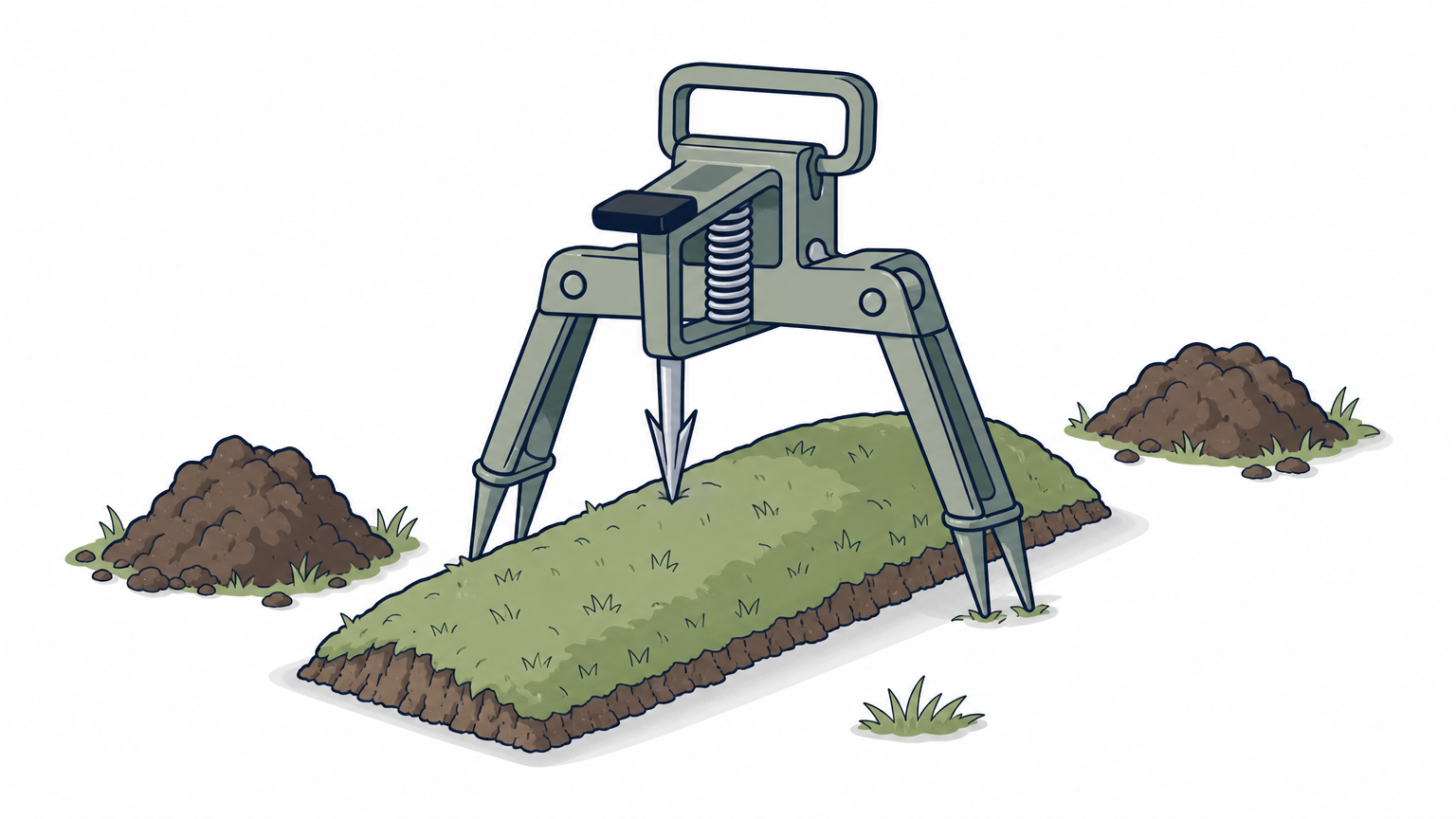
A harpoon trap sits above ground and straddles the tunnel. You flatten a raised ridge, push the stabilizing legs into the turf and set the trigger flush against the compressed soil. When the mole pushes the dirt back up , spring-driven spikes fire downward into the run.
- There is no digging.
- Setting takes a minute or two.
- It is easy to place and check on a visible ridge.
A harpoon trap is a quick first try on a shallow ridge, not a plan for a stubborn mole.
Limits and who it suits
Harpoons cannot reach deep permanent runways , which are the tunnels that matter most. In rocky or clay-heavy soil the spikes can deflect, which means a miss and a mole that now knows something dangerous is there. A mole that survives one miss is harder to catch with any trap afterward.
Buy one if your problem is a few fresh surface ridges in loose soil and you want a low-effort try. If the mole is working along a fence line, driveway or foundation, skip the harpoon and use one of the in-run traps above.
How to choose, place and use a mole trap
Pick the trap that fits your soil and the depth of the run, then spend your effort on finding an active tunnel. Placement matters more than brand.
Match the trap to your soil and runs
Use this table to narrow your choice. Before you buy, check the current Washington Department of Fish and Wildlife rules on trap types, since the state regulates some body-gripping traps.
| Trap | Setting difficulty | Best runs | Biggest weakness |
|---|---|---|---|
| Scissor | Easy | Most runs, medium depth | Stones, frost, exposed handles |
| Tunnel | Moderate, needs tuning | Shallow and deep, stony soil | Cannot see if sprung |
| Talpex | Moderate | Stone-free soil, trap-shy moles | Jams on stones, poor in shallow runs |
| Victor Out O'Sight | Hard, needs setting handles | Stone-free soil | Heavy, very strong spring |
| Harpoon | Easiest | Shallow visible ridges | Deflects in rocky or clay soil |
Skip sonic spikes, castor oil and poison peanuts. Moles eat insects and earthworms, not bait, and they adapt to artificial vibration. A physical trap is the only method that gives you proof of a catch.
Find an active run before you set anything
Most surface ridges are feeding probes the mole dug once and abandoned. The tunnels worth trapping are permanent runways along fence lines, driveways and foundation walls. To test one, step on a section to flatten it. If the mole raises it again within a day or two, the run is active.
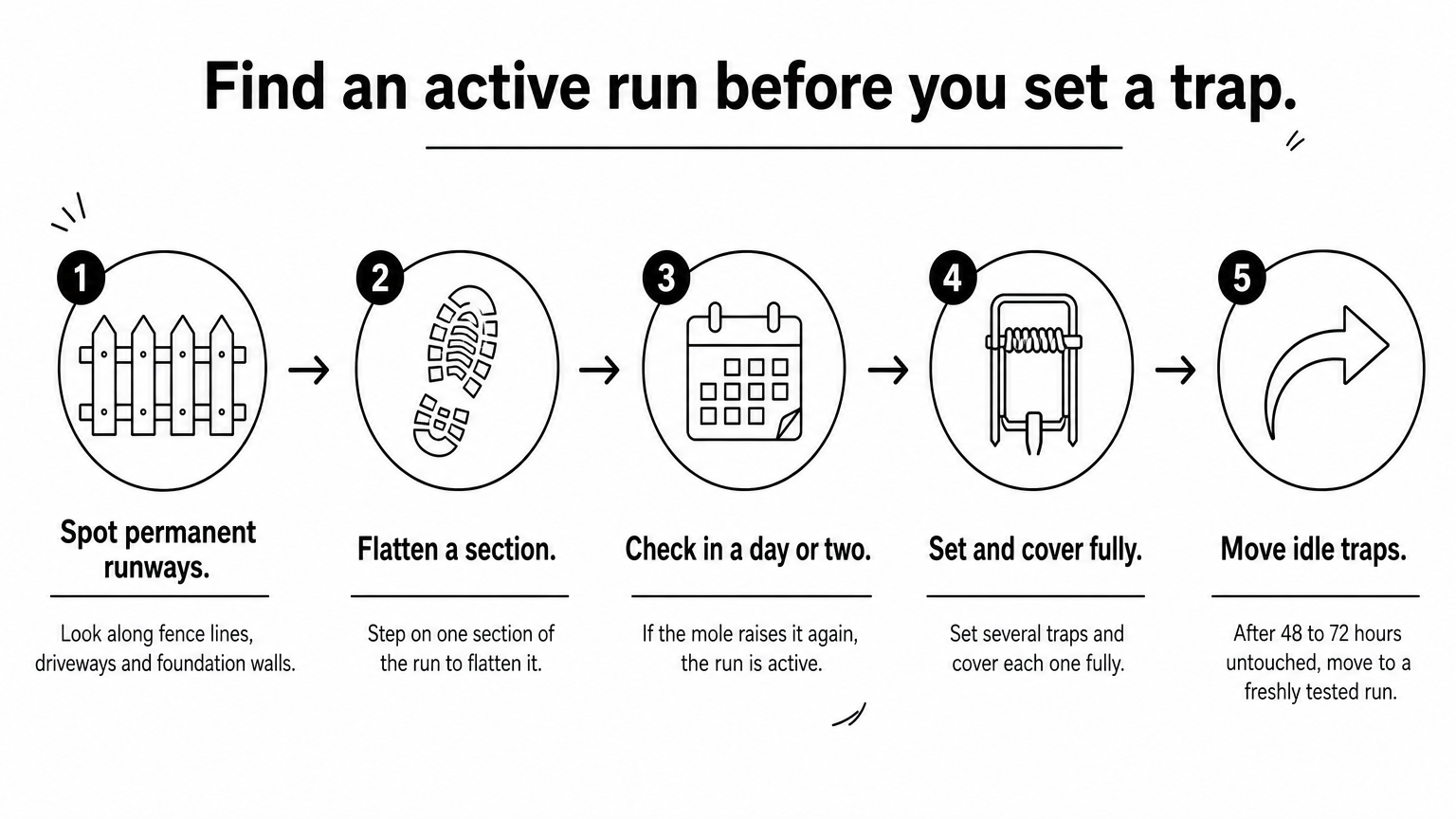
Set several traps at once, and cover each one fully, since even a small gap lets in light and makes the mole turn away. If a trap sits untouched for 48 to 72 hours , move it to a freshly tested run. Spring and fall are the busiest seasons.
When to call a pro instead
Call a pro when you have already nipped a mole or two, the property is large, or the grounds are commercial. Mole Masters uses underground devices with no poisons or chemicals, covers them with hard plastic and stakes them down. Most clients need five weekly visits or fewer.
As a worked example, our In/Out service for a property of half an acre or less is quoted at up to $395 for five weekly visits. The average client pays $345, before sales tax. The price drops if we can pull out early, and we charge nothing extra per mole caught.
If your first trap fails, a nipped mole gets harder to catch, so decide early whether to keep going yourself.
Choose the trap, then the tunnel
For most homeowners, a heavy-spring scissor trap is the best first buy, and a half-tunnel trap is the better long-term tool if you have stones, rain or a lot of runs. Add a Talpex-style trap for a mole that keeps beating the rest, and keep the harpoon for shallow ridges only. Whatever you choose, test for an active run and cover the trap fully.
If you would rather skip the trial and error, request a free estimate from Mole Masters and we will tell you the worst-case price up front.