

How to Get Rid of Moles on Your Lawn and Fix the Damage
The reliable answer to how to get rid of moles on your lawn is to find the tunnel a mole uses every day, set a trap inside it, and check that trap daily until fresh mounds stop appearing. Then you level the soil, reseed the bare spots, and keep the lawn a little drier so new moles do not move in. Baits can also kill yard moles, but they rely on poison, and most home remedies do nothing.
If you are staring at dirt piles and raised ridges, you have probably already tried something from a store shelf. Many of our customers have. Mothballs, grub killer, sonic stakes and chewing gum are sold or suggested everywhere, yet the moles keep digging because those fixes target the wrong thing.
This guide covers why moles tunnel, how to find a working runway, how to trap, how to keep new moles out, and how to repair the grass. It comes from Mole Masters, a family-run company that has done only mole control around Seattle, Tacoma and the Puget Sound since 1991.
Why moles dig in your lawn and what does not work
What the mole is after
Moles tunnel for earthworms , not for your grass. Grubs are a small part of the diet, so grub control rarely empties a lawn. Moles are also not rodents, so grain baits and "rodent and mole" poison peanuts get ignored . Soil around Seattle and Pierce County stays moist for much of the year, which keeps worms near the surface and moles working just under the turf.
Silence does not mean success. When summer dries the soil, worms drop deeper and moles follow, so a quiet lawn may mean the mole went deep , not that it left. Judge any method by several weeks without fresh mounds , not a few quiet days.
Which methods work
The table sets the usual options side by side.
| Method | Result | Why |
|---|---|---|
| Scissor or harpoon trap | Works | Removes the mole directly |
| Worm-shaped bait | Works, but it is poison | Moles eat it, but pets and wildlife share the ground |
| Castor oil repellent | Short-term at best | Moles may relocate, and monthly reapplication is needed |
| Grub control alone | Does not solve it | Earthworms are the main food |
| Mothballs, gum, hair, razor blades, pinwheels, ultrasonic stakes | Do not work | No effect on tunneling |
| Coffee grounds, vinegar, dish soap | No reliable record | Vinegar can burn grass, and soap does not kill moles |
| Shovel ambush | Luck | Needs patience and fast reflexes |
Two questions come up constantly. Coffee grounds and vinegar have no reliable record against moles. Dish soap such as Dawn does not kill a mole either, it only helps castor oil mix into water for a spray.
Only trapping and bait remove a mole, and trapping does it without poison.
Step 1. Find the active runway
Confirm it is a mole
Check the damage before you buy anything, because the fix differs by animal. Mole mounds are round and volcano-shaped, but gopher and vole damage looks different.
- Mole: round mounds of fine soil and raised ridges that follow tunnels.
- Gopher: fan or crescent-shaped mounds with a plugged hole to one side.
- Vole: open surface trails through the grass and small open holes.
Run the stomp test
Not every tunnel gets used. Straight runs , especially along a fence, curb, walkway or foundation, are the highways between nest and feeding area. Squiggly tunnels are feeding detours that a mole may never use again. Test a straight run like this:
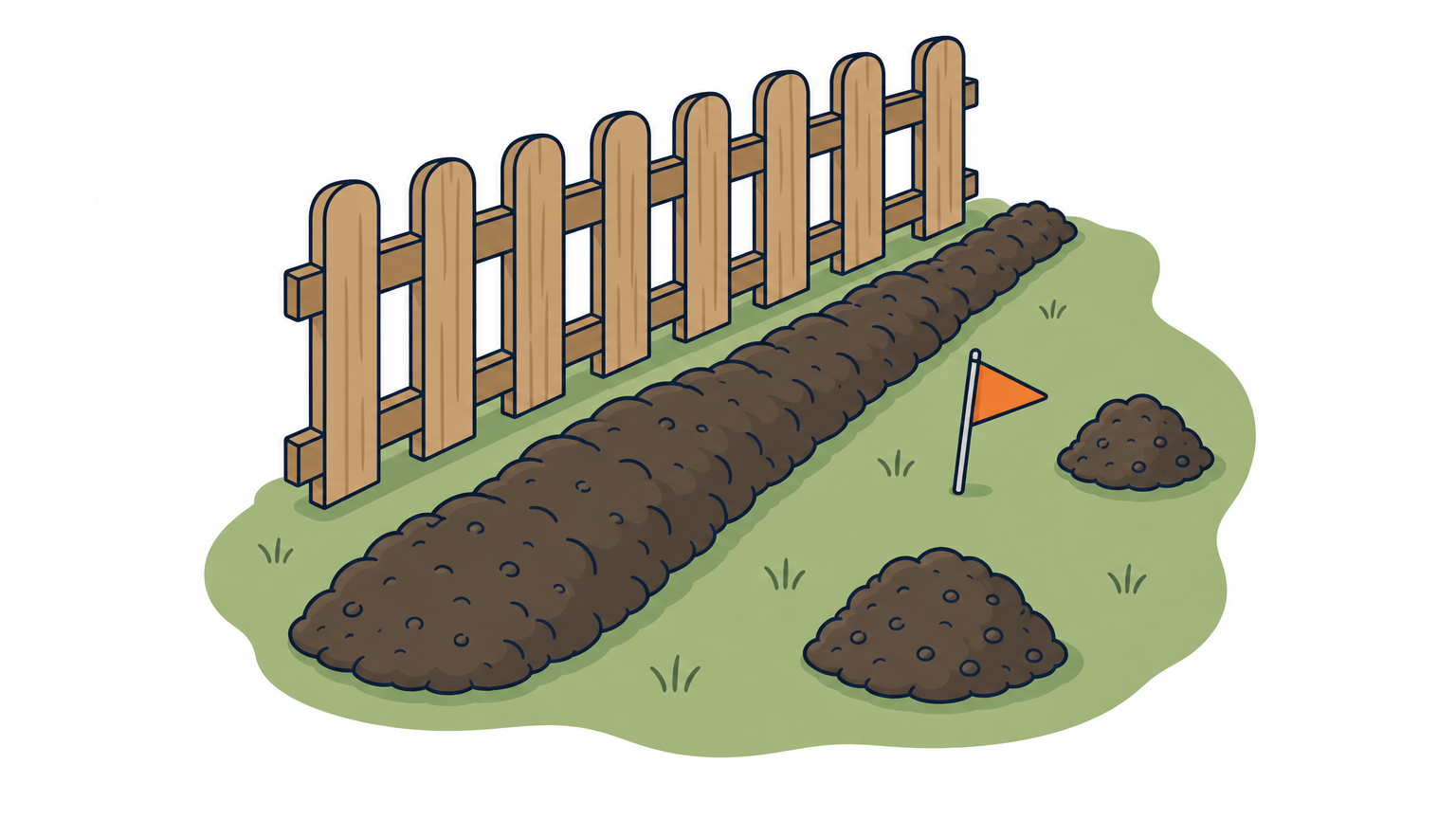
- Press a 2 to 3 foot section flat with your foot.
- Check it the next day.
- If the ridge has been pushed back up, the run is active. Mark it with a flag.
Trap the runway the mole repairs, not the one that looks freshest.
Step 2. Trap the mole in the active run
Choose a scissor or harpoon trap
A scissor trap suits deep runs , and a harpoon trap is easier in shallow tunnels near the surface. Both kill quickly, which is the practical answer if you are asking how to kill moles without poison. Hardware stores shelve working traps right beside products that do not work, so buy by trap type, not by the claims on the label.
Trap rules vary by state and city, so check with your state wildlife agency before you buy. These traps are spring-loaded, so keep children and pets clear and handle them with gloves.
Set it and check daily
Follow the manufacturer's setting instructions, then use this routine:
- Wear gloves so your scent stays off the trap.
- Open a small section of the flagged run with a trowel or probe.
- Set the trap in the run and cover the opening so no light gets in. Moles repair light leaks quickly.
- Check it every day.
- If nothing happens after two to three days, reposition the trap or move to another active run.
A fresh mound beside the trap means the mole bypassed it. Move the trap, not your hopes. Keep trapping until the stomp test shows no repairs for a couple of weeks.
A daily check on one active runway beats ten traps set at random.
Step 3. Back up the trap and block new moles
Treat bait and repellents as backup
Worm-shaped bait containing bromethalin does kill moles. It is also a poison buried in ground your pets and wildlife share , so we do not use it and would not start there. Castor oil repellent is the milder option. It makes tunnels unpleasant, usually pushes moles along rather than removing them , and needs reapplying about monthly while moles are active. Use it to protect a lawn after trapping, not instead of trapping.
Repellents and watering habits keep moles away, but only a trap or a professional removes one.
Make the lawn less inviting
Wet soil draws worms, and worms draw moles. Most lawns need about 1 inch of water per week from rain and irrigation combined, so turn the sprinklers off in rainy months and fix soggy spots near downspouts. Then walk the lawn weekly , because moles shift to new fertile ground as seasons change. Run the stomp test on any new ridge you find.
When to call a professional
If a week of trapping catches nothing, or the yard is large, a professional saves time. Mole Masters' In/Out Mole Control uses underground devices with no poisons or chemicals. It runs on five weekly visits, and the published price is up to $395 for a property of half an acre or less. Our average client spends $345. Larger or harder yards can change the estimate, and sales tax is extra. We do not charge per mole caught, and the price drops if we can pull out early. The estimate is free.
Step 4. Repair the lawn after the moles are gone
Wait, then level the damage
Hold off until two weeks pass with no new mounds , or fresh mounds will bury your work. Then rake each mound flat, spreading the soil thinly or moving it to a garden bed, because a thick pile smothers the grass underneath. Press collapsed tunnels down with your foot or a light roller, since hollow tunnels dry out and cut off roots. Mole Masters does not generally clean up molehills, so plan on this being your weekend job.
Reseed the bare spots
Will the grass come back? Usually, yes. Moles do not eat grass, they disturb roots, so turf over a firm, filled tunnel often recovers once it is watered . Where grass browned and stays dead, loosen the surface, add a thin layer of topsoil, sow seed, and keep it moist until it fills in . Early fall or spring suits the cool-season lawns common in the Puget Sound area.
Grass usually recovers once the tunnels are firm and the moles are truly gone.
Keep the lawn and lose the moles
Moles come for worms, so repellents, gum and mothballs do not move them. A trap in a proven active runway does. Find the run with the stomp test, set a scissor or harpoon trap, check it daily, and keep the soil on the drier side. Once two weeks pass with no new mounds, level the soil and reseed the bare patches.
If trapping stalls, or you would rather not handle traps at all, we are happy to take over. Mole Masters controls moles without poisons or chemicals across Seattle, Tacoma and the surrounding area. You can request a free Up-To estimate from Mole Masters by form, phone or email, and we will respond promptly.