

How to Get Rid of Moles in Your Garden, Step by Step
Here is how to get rid of moles in your garden : find the tunnel the mole uses every day, trap the animal in it, and repair the damage once the pushing stops. Repellents and gadgets rarely remove a mole, and poison baits carry risks you can avoid. A scissor or harpoon trap in an active run, plus a buried barrier around your beds, is the reliable do-it-yourself route.
You probably know the problem already. Fresh mounds appear overnight, the lawn turns spongy underfoot, and vegetable roots dry out where a tunnel undercuts them. Coffee grounds, vinegar and pinwheels did not help, because one mole patrols a large territory and most home remedies never touch it. No method clears a yard overnight, and anyone promising that is selling something.
This guide covers why moles settle in, how to find the tunnels that matter, which remedies to skip, how to trap, and how to repair the lawn. Mole Masters has done nothing but mole control around Seattle and Tacoma since 1991, so the advice comes from daily work in Puget Sound yards.
Why moles show up in your garden
Moles come for the earthworms and soil insects in your ground, not for your plants. Knowing what draws them tells you which fixes are worth your time and which are not.
What moles are after
Moles eat mostly earthworms. They do eat grubs, but extension researchers at Purdue point out that grub control does not clear a lawn , because earthworms make up most of a mole's diet. Moist, healthy soil full of worms is exactly what a mole wants.
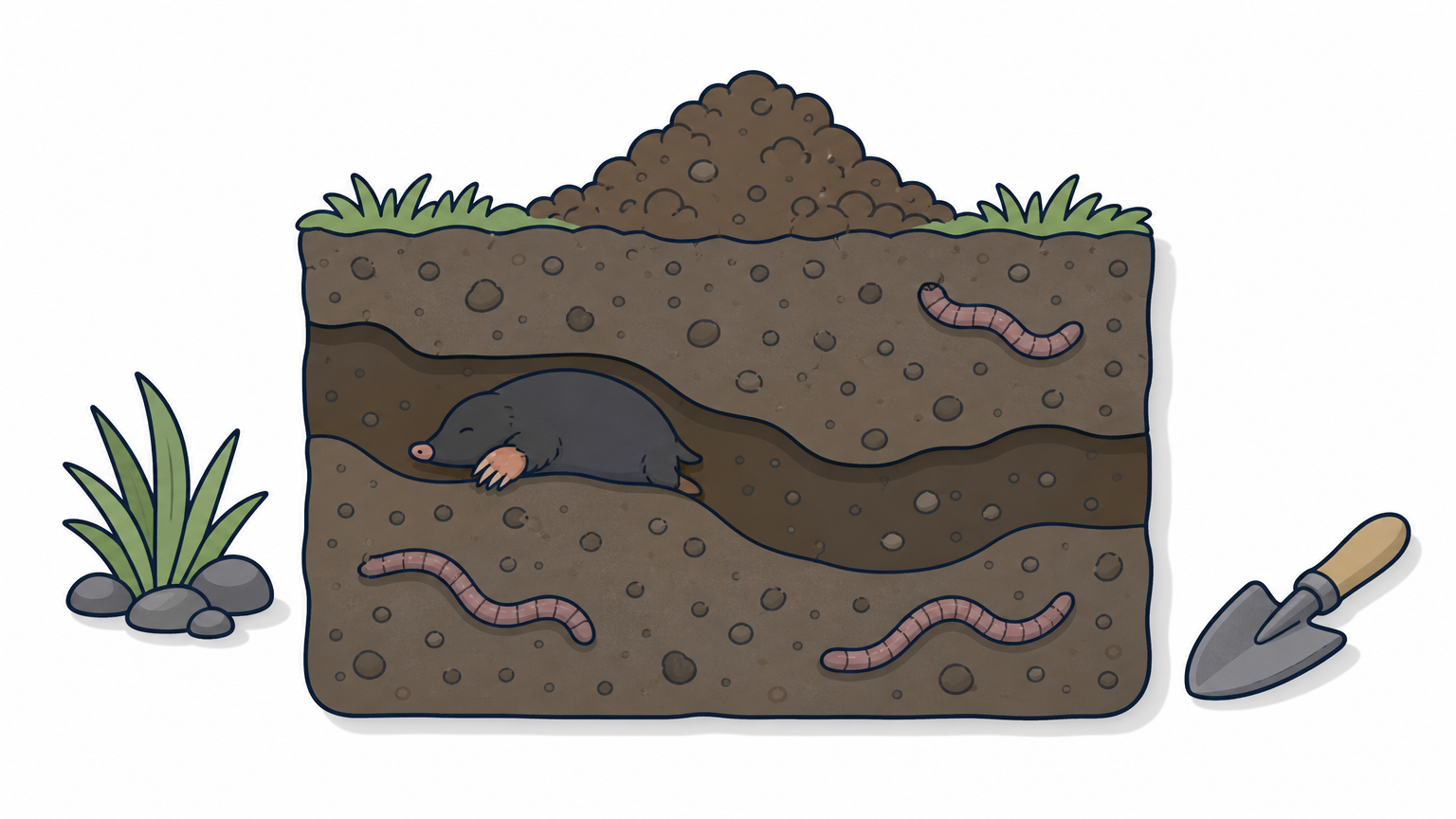
That explains the sudden arrival. A mole may have moved in from a neighbor's yard, or followed worms toward soil you just watered or amended. In western Washington, wet soil from fall through spring keeps worms near the surface, so mounding is busiest then. When the ground dries in summer or freezes, worms and moles go deeper , so a quiet lawn does not mean the mole is gone.
Moles chase worms, so a well-fed, well-watered garden will keep drawing them in.
Moles, voles, or gophers
Check what you are dealing with before you buy anything, because the three animals need different treatment.
| Animal | What you see | What it eats |
|---|---|---|
| Mole | Round, volcano-shaped mounds with no visible hole, plus raised ridges | Earthworms and insects |
| Vole | No mounds, but surface runways in the grass and small open holes | Plants, bulbs and bark |
| Gopher | Fan-shaped mounds with a plugged hole off to one side | Roots and tubers |
Moles do not eat your plants. The damage to roots comes from tunnels cutting through the root zone , and voles often use abandoned mole runs to reach your plants.
Step 1. Find the active runs
Only some of the tunnels in your yard are in use right now, so trap placement decides everything . A trap in a dead tunnel catches nothing.
Flatten and wait 24 hours
- Walk the garden and mark each fresh mound and raised ridge with a flag.
- Stomp a few feet of each ridge flat with your foot.
- Check the same spots the next day.
A ridge that has been pushed back up is active. A ridge that stays flat is abandoned, so pull its flag.
Pick the main highway
Moles dig two kinds of tunnels. Squiggly, wandering ones are for feeding and get used once. Straight runs that follow a fence line, walkway, foundation or bed edge are travel routes between the nest and the feeding area , and the mole uses them repeatedly.
Choose a straight run that passed the stomp test. That is where your trap or bait goes.
Trap the run the mole repairs, not the one that looks the most dramatic.
Step 2. Skip the myths, use what helps
Most home remedies do not get rid of garden moles. At best they nudge the mole next door , or into a different bed of your own garden. Here is how the common options stack up.
What works and what does not
| Method | Result | Notes |
|---|---|---|
| Castor oil repellents | Mixed | Said to make soil unpleasant for worms. Any effect is temporary and washes out with rain. |
| Vinegar spray or coffee grounds | Unreliable | Vinegar can burn foliage, so keep it off your plants. |
| Mothballs, hair, razor blades, gum | Does not work | Purdue's plant diagnostic lab lists these as ineffective. |
| Pinwheels, ultrasonic stakes | Does not work | Same source. |
| Grub killer | Does not work | Moles eat worms, not mainly grubs. |
| Grain or seed bait for rodents | Does not work | Moles are not rodents and do not eat seeds. |
| Trapping | Works | Covered in Step 3. |
| Worm-shaped bait | Works, with risks | Covered in Step 3. |
If you want to try a deterrent, castor oil is the one with a rationale behind it. Treat it as a short-term nudge and do not rely on it as your plan. Watering less often also helps a little, because soggy soil keeps worms close to the surface.
Protect your beds with a buried barrier
A physical barrier is the one non-lethal method that works on a small, valuable area. Line raised beds with quarter-inch to half-inch hardware cloth before you fill them. For ground-level vegetable plots, bury a hardware cloth wall around the edge, as deep as you can manage. About 2 feet is the common recommendation.
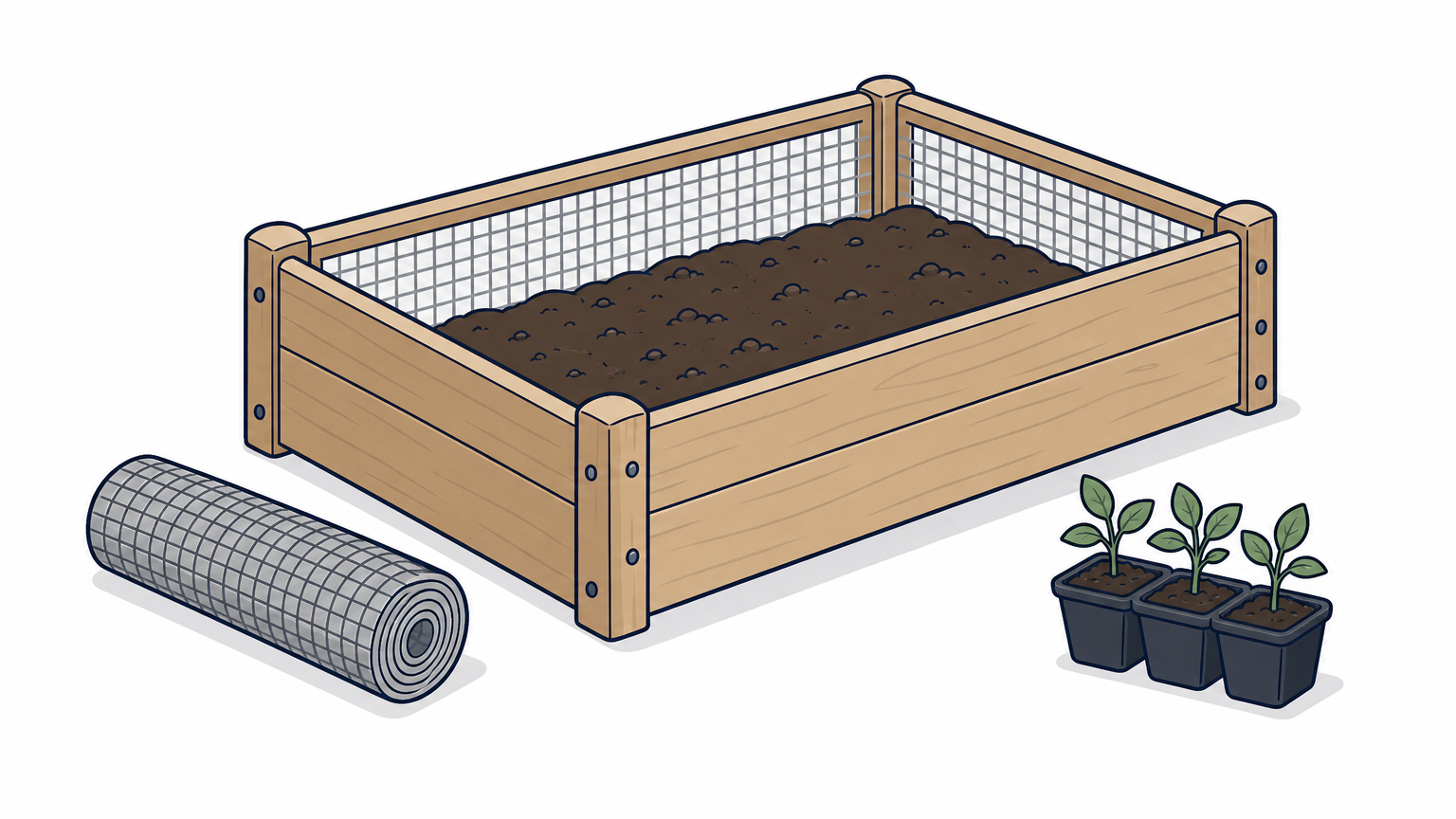
Repellents hope the mole leaves. A barrier makes the decision for it.
Step 3. Trap the mole
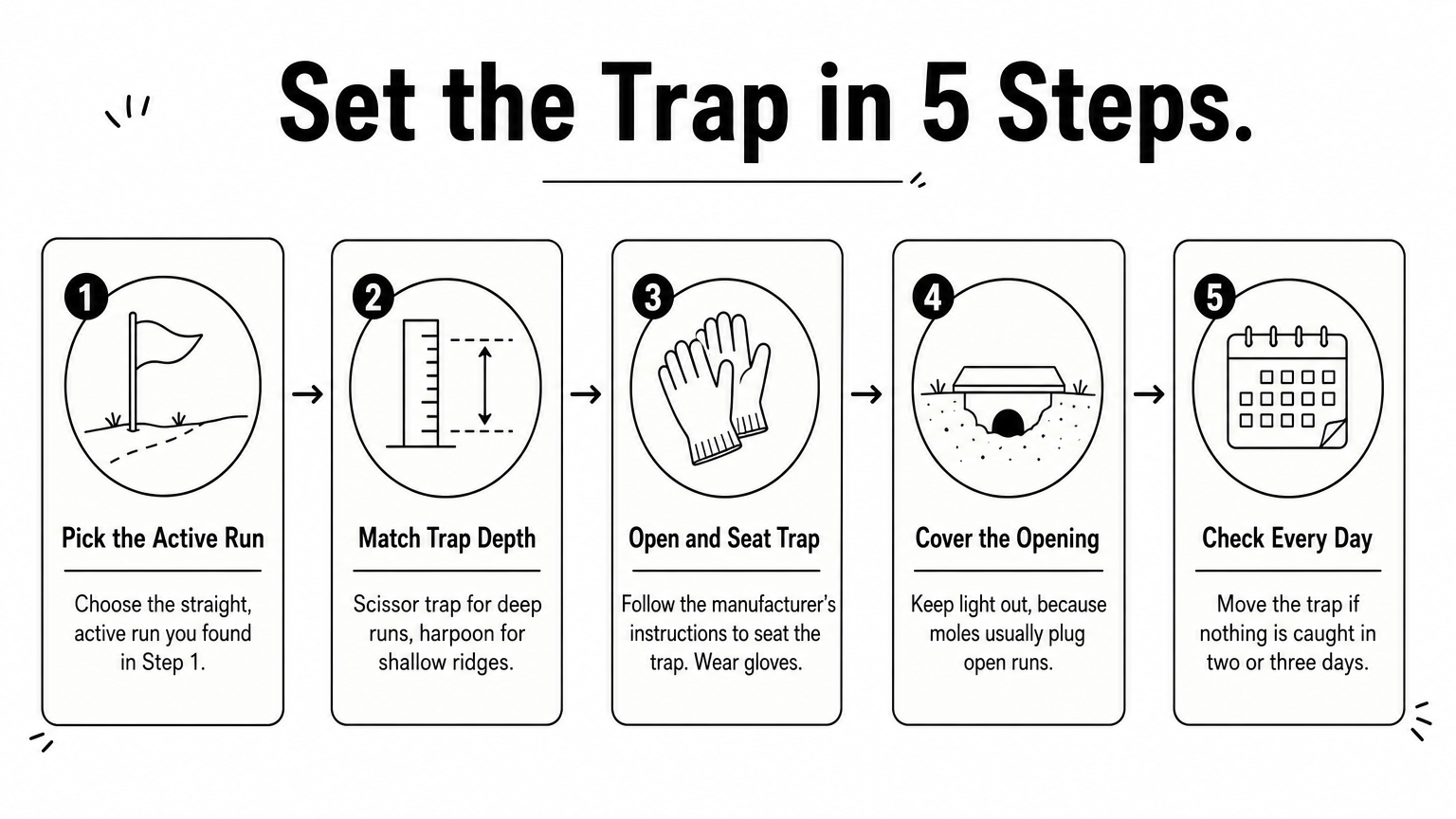
Trapping is the most dependable do-it-yourself method for how to get rid of garden moles , because it removes the animal instead of asking it to leave. Use a scissor trap in deeper runs and a harpoon trap where the tunnel sits just under the surface.
Set the trap in an active run
- Pick the straight, active run you found in Step 1.
- Match the trap to the depth: scissor for deep runs, harpoon for shallow ridges.
- Follow the manufacturer's instructions to open the tunnel and seat the trap. Wear gloves.
- Cover the opening so light does not reach the tunnel. A mole that finds an open run usually plugs it.
- Check daily. If nothing is caught in two or three days, move the trap to another active run.
Trap rules differ by state, and Washington restricts certain trap types . Confirm with the state Department of Fish and Wildlife that the model you buy is legal for moles before you set it.
A trap in an active, straight run beats any repellent sprayed across the lawn.
Where bait fits
Worm-shaped baits containing bromethalin are effective, and Purdue's lab confirms it. They follow the same placement rule: use them in an active run. They are poison, though, and that is a real risk around dogs, cats, children and wildlife. Read the label closely and check your local rules before you use one.
We do not use poisons or chemicals at Mole Masters. In our experience, a well-placed trap does the same job without the risk.
Step 4. Repair the lawn and keep watch
Once the catching stops, rake out the mounds, firm the ridges and reseed bare spots . Then keep watching for new mounds for several weeks, because empty tunnels in good soil attract the next mole.
Repair the lawn
- Rake mound soil flat or spread it thinly across the lawn as topdressing.
- Press collapsed ridges down so the grass roots reconnect with the soil.
- Reseed bare patches and water lightly.
- Keep your flags up and repeat the stomp test weekly.
If a ridge comes back up after you flatten it, an active mole is still there.
When to hire a pro
Call a professional when mounds keep appearing after a couple of weeks of trapping , when the property is large or has several runs, or when kids and pets rule out poison.
Mole Masters' In/Out Mole Control is built around five weekly visits , with underground devices that are covered by hard plastic and staked down. The listed "Up-To" price is $395 for a half acre or less, and the average client pays $345, before sales tax. Take a half-acre yard in Puyallup or Issaquah. You would see five visits over about five weeks, with a worst-case quote of $395. The price drops on a sliding scale if the job ends early, and there is no extra charge per mole caught. Most clients need five trips or fewer.
We do not generally clean up molehills or repair lawns, so the raking and reseeding above stays with you.
Repair the yard yourself, but let an experienced trapper handle a mole that will not quit.
Your next move against garden moles
Getting rid of moles comes down to a short routine. Find the active run, trap it with the right trap, protect your beds with a barrier, and repair the lawn. Skip the mothballs, grub killers and gadgets, and treat any repellent as a short-term nudge.
If you are in King or Pierce County and the mounds keep coming, you do not have to keep guessing. Request a free "Up-To" estimate from Mole Masters by form, phone or email, and we will tell you what your yard needs.