

6 Mole Pest Control Methods for Seattle Lawns, Ranked
The most dependable mole pest control methods are trapping, whether you set the traps yourself or hire a specialist to do it. Baits can work but put pets at risk, repellents help at the margins, and gas, gadgets and kitchen remedies fail. Choose DIY traps if your yard is small and you can check them daily. Choose a professional if your lot is large, your dog digs, or the moles keep coming back.
Moles are hard to beat because you almost never see them. You see ridges, mounds and soft spots in the lawn, and a hardware store aisle full of products that promise a quick fix. Many Puget Sound homeowners try poison or a repellent first, then call us when the tunnels keep spreading.
This list ranks six methods from most to least reliable. Each one covers how it works, who it suits and what to watch for, and the last section helps you choose. Mole Masters has done nothing but mole removal in the Seattle and Tacoma area since 1991, so we say plainly where a pro earns the cost and where you can do the job yourself.
1. Professional mole removal with underground devices
How it works
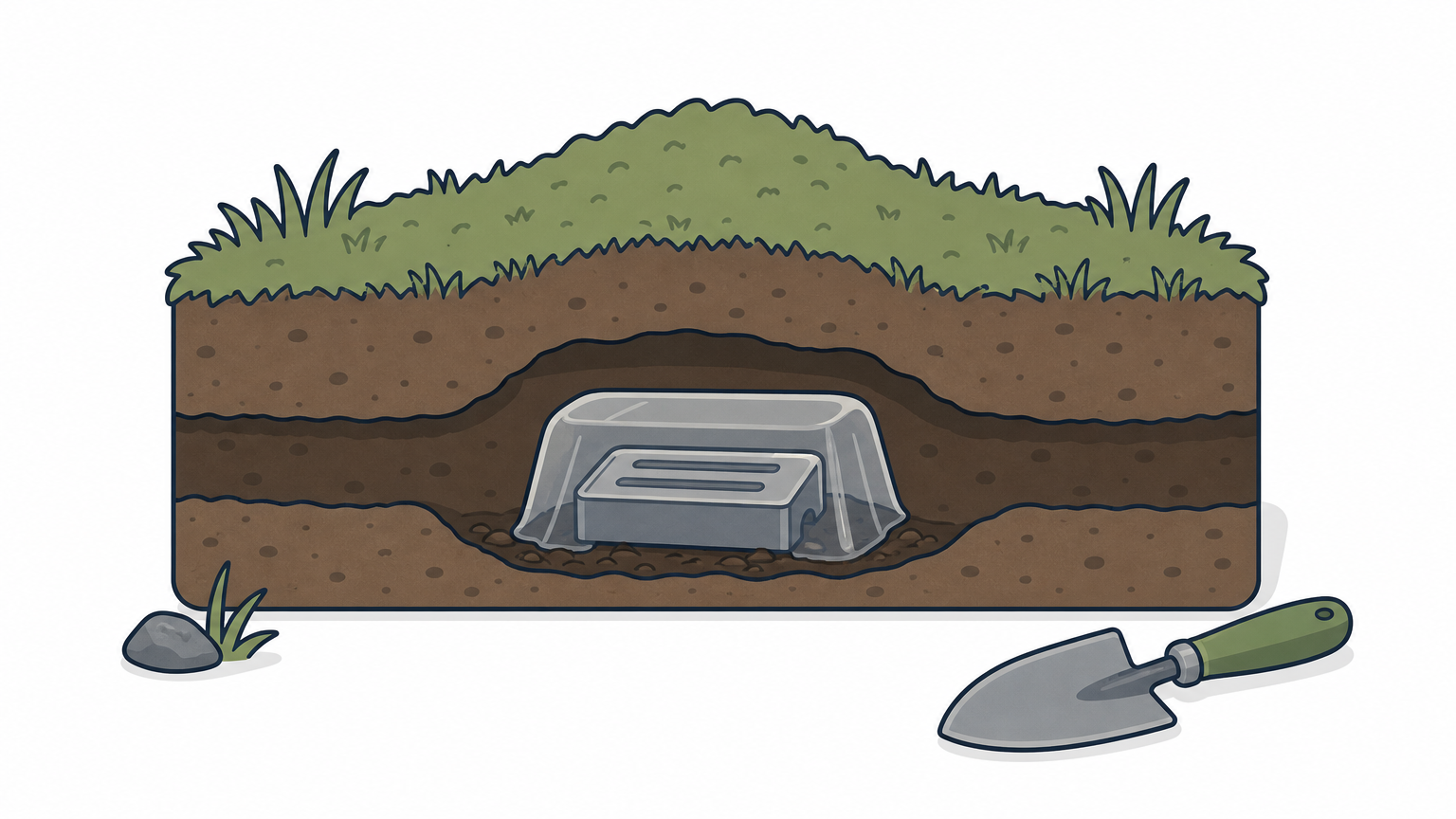
A specialist inspects the yard, finds the active tunnels , places devices underground and returns on a schedule to check and adjust. Our In/Out Mole Control follows that cycle. Each visit assesses the situation, adjusts if needed and ends with a summary of what is happening on site. We use no poisons or chemicals , and the devices are covered with hard plastic and staked down for protection. Most clients need five weekly visits or fewer.
If you wonder whether pest control companies handle moles, some general companies do, so ask what method they use and whether it involves poison. Specialists like us do nothing else, which is why we can adapt the system to each yard with extra devices or visits.
Pricing starts with a free estimate that shows an "Up-To" figure, the most you could pay . For a property of half an acre or less on the five-trip weekly system, that figure is $395 plus sales tax, and our average client spends $345. If the job takes fewer visits, the price drops on a sliding scale, and we never charge extra per mole caught. Larger lots and difficult locations can change the number, so confirm the current figure when you request an estimate.
A quote with a ceiling price beats an open-ended hardware store experiment.
Who it suits and what to watch
This is the right pick when the yard is large, the moles return, or children and pets use the lawn. Know what the service covers before you book.
- Best for: larger residential lots and commercial grounds such as office parks, HOA common areas and retail sites. We assess commercial properties through our office rather than online.
- Repeat problems: moles often arrive from neighboring yards. If you need maintenance for longer than eight months, year-round service fits better, though we do not usually recommend starting there.
- Not included: we do not generally clean up molehills or repair lawns. Our Tunnel Clear Application addresses the tunnels themselves.
2. DIY mole traps
How it works
Trapping is the method university extension specialists call the most successful and practical way to get rid of moles. University of Missouri Extension describes three good designs. All of them use a broad trigger pan that fires when the mole pushes up the tunnel floor you pressed down.
| Trap | How it kills | Setup note |
|---|---|---|
| Harpoon | Spring drives spikes into the runway | Stakes straddle the run, set over it |
| Scissor-jawed | Jaws close across the run | Repack a straight run, cut a path for the jaws in heavy clay |
| Choker loop | Loop tightens around the body | Needs a hole dug across the tunnel |
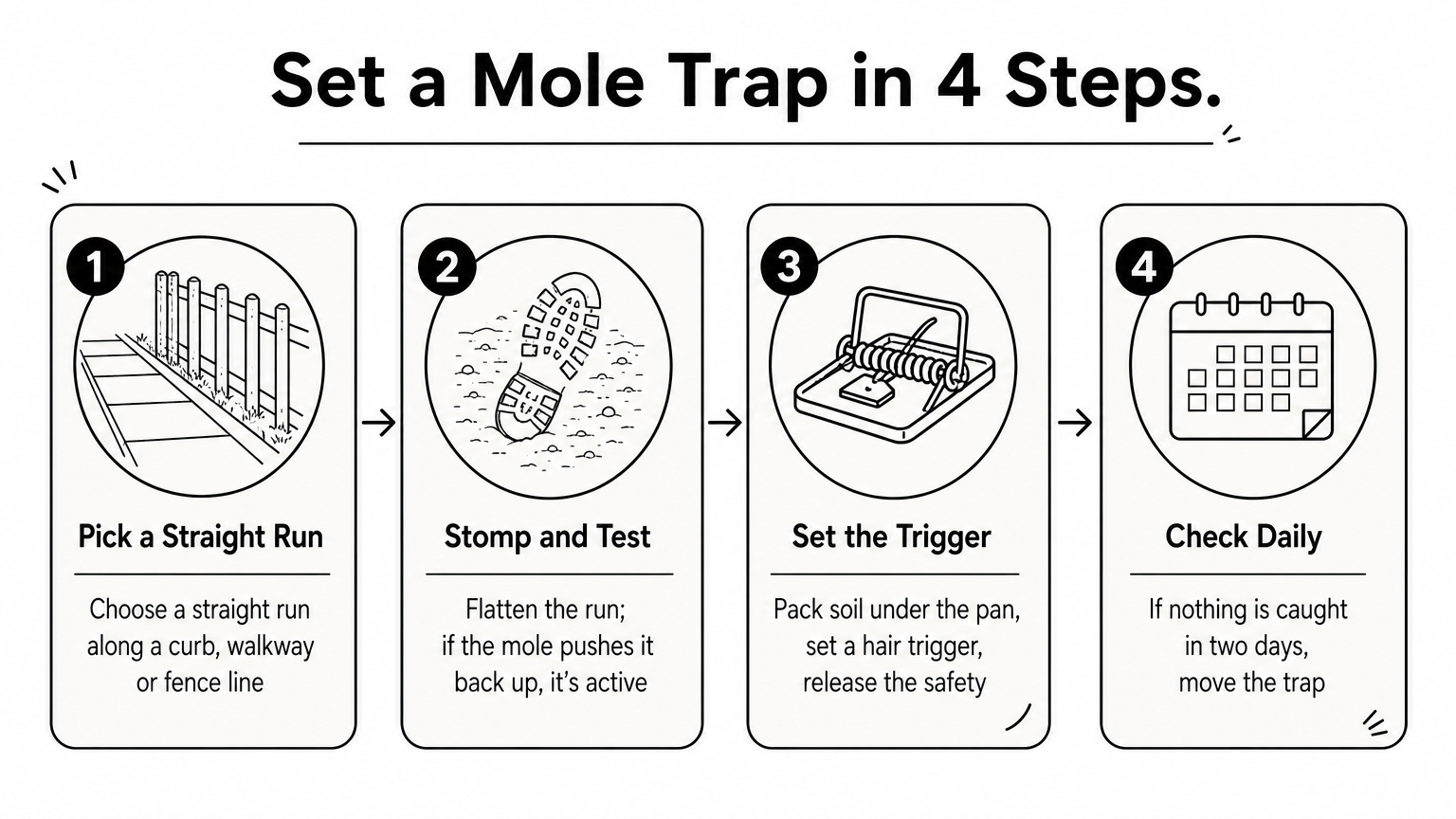
Placement matters more than brand. Follow these steps:
- Pick a straight run along a curb, walkway or fence line. Twisting ridges are usually feeding tunnels, and mounds are the wrong spot for a trap.
- Stomp the run flat and check the next day. If the mole pushed it back up, the run is active. Stomping is a test, not a treatment, because it removes no moles.
- Pack soil firmly under the trigger pan, set a hair trigger and release the safety.
- Check daily. If nothing is caught in two days , move the trap to a new run.
A trap only works on a run the mole is using, so confirm activity before you set anything.
Who it suits and what to watch
DIY traps suit a small yard and a patient owner who will check them daily. Traps are sold at hardware and farm-supply stores, and a well-placed one is the fastest route to a catch you can do yourself. Purdue's plant and pest lab warns that the same shelves also hold products that do not work.
- Identify the animal first. Raised ridges mean moles. Pocket gophers need different traps.
- Handle with care. These are spring-loaded devices, so keep children and pets away while they are set.
- Expect refills. Moles from adjoining land can move into vacated ground.
3. Poison baits for moles
How it works
Worm-shaped baits contain bromethalin , a poison, and are dropped into active runs. Talpirid and Tomcat Mole Killer are examples. Gels containing warfarin are injected into runs with a syringe. Purdue reports the worm-shaped bait works because it matches what moles eat.
Grain, seed and nut baits sold to kill "rodents and moles" do not work. Moles are not rodents, and they eat earthworms. Missouri Extension adds that little research compares the cost-effectiveness of baits with trapping.
Who it suits and what to watch
Baits suit someone who will not trap, has no pets and no children, and reads the label closely. Many of our clients tried baits before calling us.
- Pet risk: a dog that digs up bait, or eats a poisoned mole, can be exposed.
- No proof of result: a poisoned mole may die underground, so you only learn it worked when the activity stops.
- Label rules: follow the product label exactly, including placement.
Worm-shaped bait can work, but it puts pets and wildlife at risk.
4. Castor oil repellents and food-source control
How it works
Castor oil sprays and granules make the soil unpleasant and can reduce earthworms . Missouri Extension says castor oil products may prevent eastern mole damage in certain circumstances, but no repellent eliminates the problem. They work best applied before moles move in, and castor oil can harm some plants, so test a small patch first.
The food-source approach is trickier. Moles eat mostly earthworms, so grub killers alone fail, and a grub-free lawn can still have moles. Cutting the food supply can also make moles dig more before they leave. In the wet soil of Seattle and Tacoma, drying out the ground is rarely practical.
Who it suits and what to watch
Repellents suit a yard with no moles yet, next to one that has them. Use them to support another method, not replace it.
- Reapply per label: results fade, and rain can wash product off.
- Expect more mess first: moles hunting new food may tunnel more.
- Do not rely on them alone once ridges appear.
Repellents work best as prevention, not as a cure for an active infestation.
5. Gas cartridges and fumigants
How it works
Gas cartridges and aluminum phosphide tablets are placed in a run to release toxic gas. Missouri Extension does not generally recommend them because mole tunnel systems are too long and too porous for gas to hold. A mole can seal off a section or simply move away.
Some websites suggest piping vehicle exhaust into tunnels. Do not do this. Exhaust carries carbon monoxide , which is deadly to people and pets, and it is no more reliable than the cartridges.
Who it suits and what to watch
Nobody needs fumigants when trapping is available. If you still consider a registered product, follow the label to the letter.
- Poor odds: gas escapes through the soil and the tunnels.
- Hazard to people: these products are toxic around children and pets.
- Better use of money: a few traps or a professional visit cost less than repeated failed treatments.
Gas leaks out of long, porous tunnels, so it rarely finishes the job.
6. Home remedies and gadgets
How it works
Extension specialists at Purdue and Missouri say remedies such as mothballs, human hair, razor blades and chewing gum do not work. The same goes for pinwheels, windmills and ultrasonic or electromagnetic repellers. Planting caper spurge or castor bean as a living repellent has no supporting research either.
You will find websites that recommend garlic, coffee grounds or vinegar. Missouri Extension notes that home remedies placed in burrows do not work in practice, and scientific testing has not confirmed the claims for repeller devices. The honest summary is that no shortcut exists.
Who it suits and what to watch
These methods suit nobody who wants the moles gone. At best they cost a few dollars and a few weeks.
- Lost time: every week of failed remedies lets new tunnels spread.
- Real hazards: bleach, petroleum products and razor blades in the soil can hurt pets and people.
- Ultrasonic units: pets can hear them even if the moles ignore them.
Skip the gadgets, because the weeks they waste cost more than the traps would.
How to choose the right method for your yard
Side-by-side comparison
The fastest reliable way to get rid of ground moles is trapping an active run , whether you do it or a professional does. The table sets every method against the same four questions.
| Method | Reliability | Pet and child risk | Effort from you |
|---|---|---|---|
| Professional devices | High | Low, no poisons | Low |
| DIY traps | High if placed well | Low to moderate | High |
| Poison baits | Moderate | High | Moderate |
| Castor oil repellents | Low to moderate | Low | Moderate |
| Gas cartridges | Low | High | Moderate |
| Home remedies and gadgets | None proven | Varies | Varies |
Match the method to your yard
Start by confirming you have moles. Raised ridges and volcano-shaped mounds point to moles, while voles leave trails without mounds.

- Small yard, fresh ridges, time to check daily: DIY traps.
- Large lot, commercial grounds, pets, or a failed first attempt: a professional.
- No moles yet but neighbors have them: a repellent, or our Preventative Mole Control Application.
- Already used bait: keep dogs out of the area and tell whoever treats next.
When to leave moles alone
Moles are not always the enemy. Their tunnels aerate soil, and they eat white grubs. In stomach analyses cited by Missouri Extension, nearly two-thirds of the moles studied had eaten grubs.
If the ridges sit in a back corner you never mow, tolerating them may be the cheapest answer. If you do control them, residential yards stay mole-free for years with persistence, though large farm acreage is far harder.
Pick trapping and skip the rest
Trapping beats every other mole control method because it targets the animal in the tunnel it actually uses. Do it yourself if your yard is small and you will check traps daily. Hand it to a specialist if you have a bigger lot, pets, or a problem that returns. Baits carry pet risk, repellents only support, and gas and gadgets waste your time.
If you live around Seattle, Tacoma or the surrounding area and want it handled, request a free estimate from Mole Masters. You will get an "Up-To" price with no surprises, a poison-free plan and a team that has done only moles since 1991. You can also call the office at (253) 926-0402 on weekdays.